Last week, in part 1, “In the beginning there was fire”, I wrote about the very first marks. Here is someone who spent his life watching those marks appear.
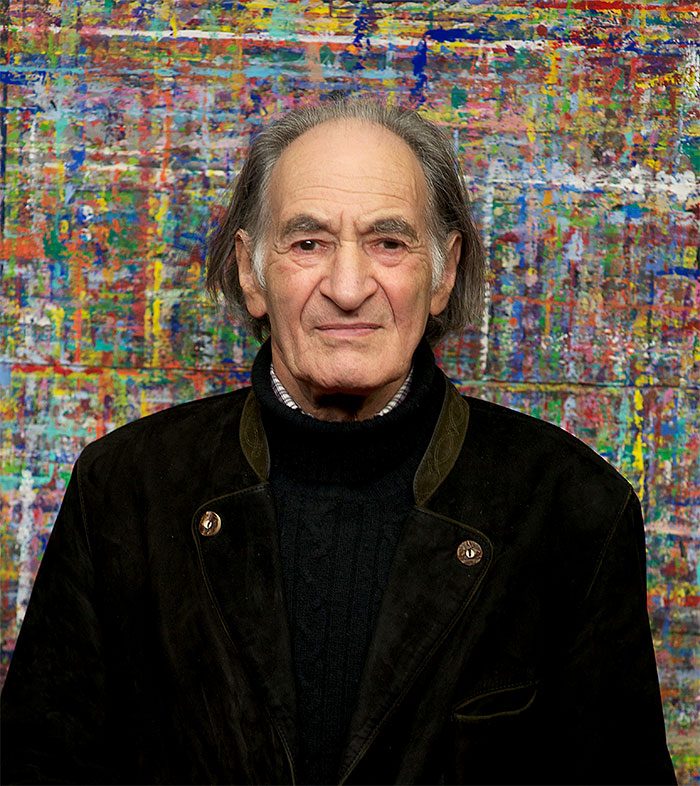
Arno Stern was born on 23 June 1924 in Kassel, Germany. In 1933 his family fled Nazism and settled in France; he survived the war years as a refugee, living in hiding and interned in a labour camp. In 1946, near Paris, he was asked to look after children in a home for war orphans. He gave them paper and paint, and noticed something that would shape the rest of his life: the children’s pictures were richer and more personal when nobody suggested a subject.
In 1949 he opened a studio in Paris, the Académie du Jeudi, and gradually defined what he called the Closlieu — the “closed place”. It is a simple room without windows, protected from the outside world. Sheets of paper are pinned to the walls. In the centre stands the table-palette: 18 colours, each with three brushes, ready to use with no preparation. Children and adults of all ages paint side by side, standing at the wall.
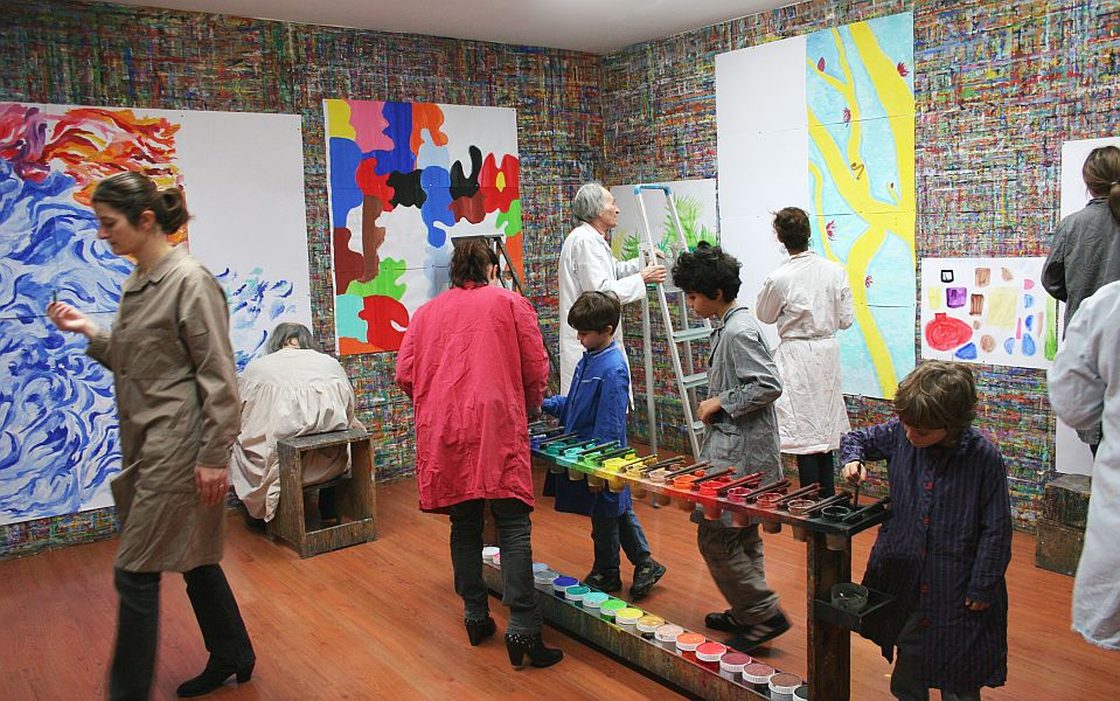
The Closlieu
The rules matter as much as the room. Nobody comments, corrects or praises. No subject is set. Each person decides alone when a painting is finished. And the paintings never leave the studio: they are not taken home, not exhibited, not shown to parents. Stern insisted this was not art therapy, nor art lessons, but a game — the “Jeu de peindre”, the painting game.
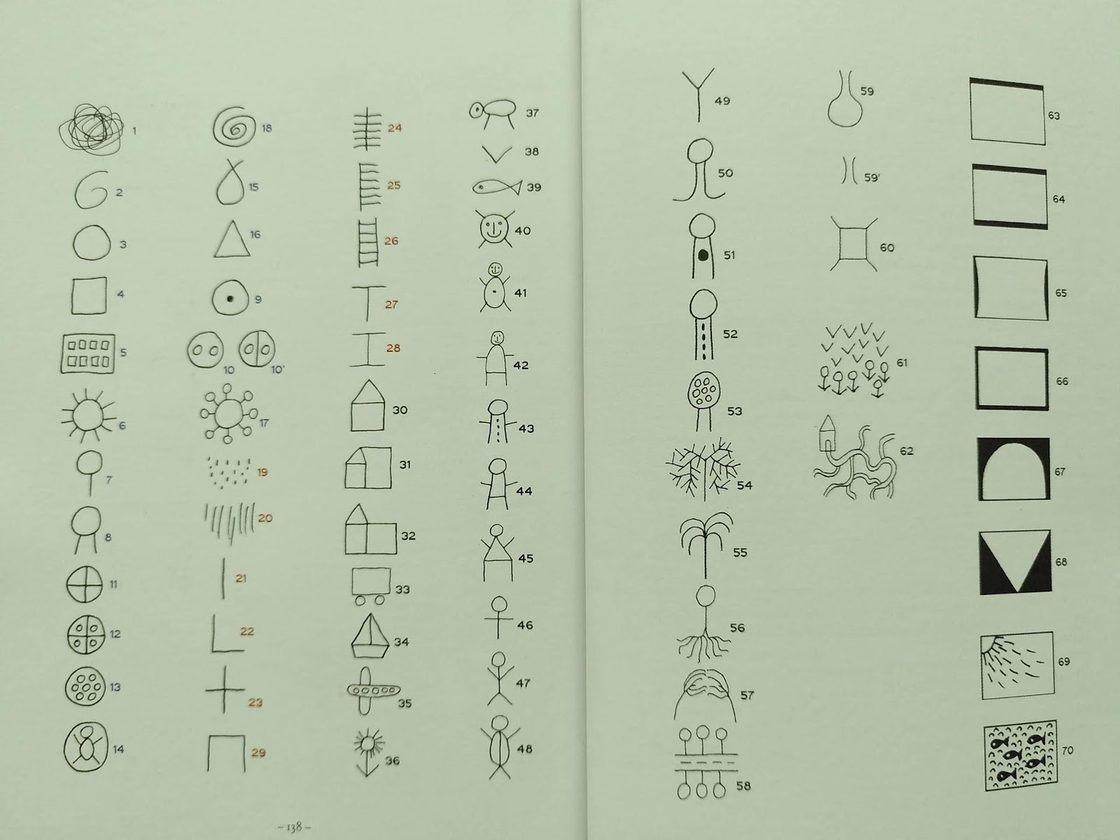
Over decades of watching people paint, and on journeys between 1966 and 1972 to people who had never seen our images, he found the same figures appearing again and again, in every culture. He called this “la Formulation”: a universal code of traces — around seventy forms — rising from what he called organic memory, not from imitation. For him, spontaneity is not something to be taught; it is something we lose under the weight of expectations, and can recover when the conditions are right. He called his approach “creative education”: the opposite of conditioning to dependence, an initiation into autonomy.
Arno Stern died at Chouppes, in the Vienne, on 30 June 2024, a week after his hundredth birthday. His wife Michèle and their children carry his work on.
Sources: arnostern.com · BnF · Wikipédia