In the caves of Africa, and more specifically in South Africa, archaeologists have found traces of fire dated to 1.8 million years ago. It’s probable that fire was used long before that; these are only the traces we have found. Where you have fire, you have charcoal. Where you have the young of any mammal species, you have play, and where you have human play, you have curiosity.
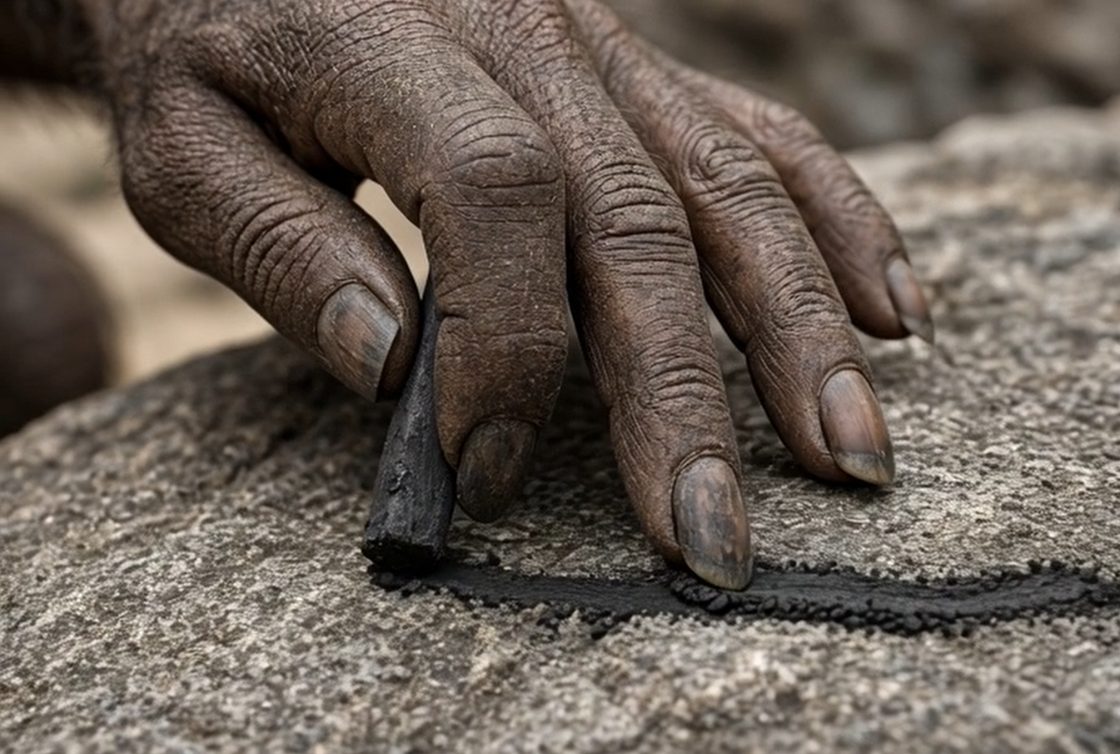
Imagine the fingers of some Homo erectus child picking up those little pieces of charcoal and starting to make marks on the walls of the cave, maybe 2 million years ago. I imagine that for the longest time, they only made marks, but at some point in our ancestors’ evolution, somebody decided to make a very long mark. That very long mark is where thought entered into movement, and abstraction became visible for the first time.
If you can make one line, you can make two, three, or many lines: 1, 2, 3, many. That is the beginning of mathematics, and if you’re drawing lines on a surface, it is also the beginning of geometry. You can make a grid. You can make triangles, squares, any kind of geometric shape, and you can make circles. You can put one circle inside another, or one circle around other things. You can put a cross that marks the middle of a circle.
These are fundamental formulations that still appear today in children’s spontaneous artwork, and in the kind of spontaneous marks you might make yourself when you’re doodling while talking on the telephone. There is a fundamental, ancient human drive to make marks.
Somebody, sometime, made a circle and put two small circles inside it, and maybe jumped back in astonishment to see a face looking back. Add a little mark for the mouth, and the resemblance is complete.
The first representation: the magic of images. The image comes alive. Now you add, the way children do:
– hands, then arms
– feet, like stars, with toes
– legs
– a body
– maybe some hair, some ears
You’re getting pretty good. You can start to draw animals too. You can take red earth, yellow earth, maybe white earth like clay or chalk, and paint pictures of monumental size and breathtaking beauty, without ever considering a notion called art, because what you’re doing is simply a pure expression of life.
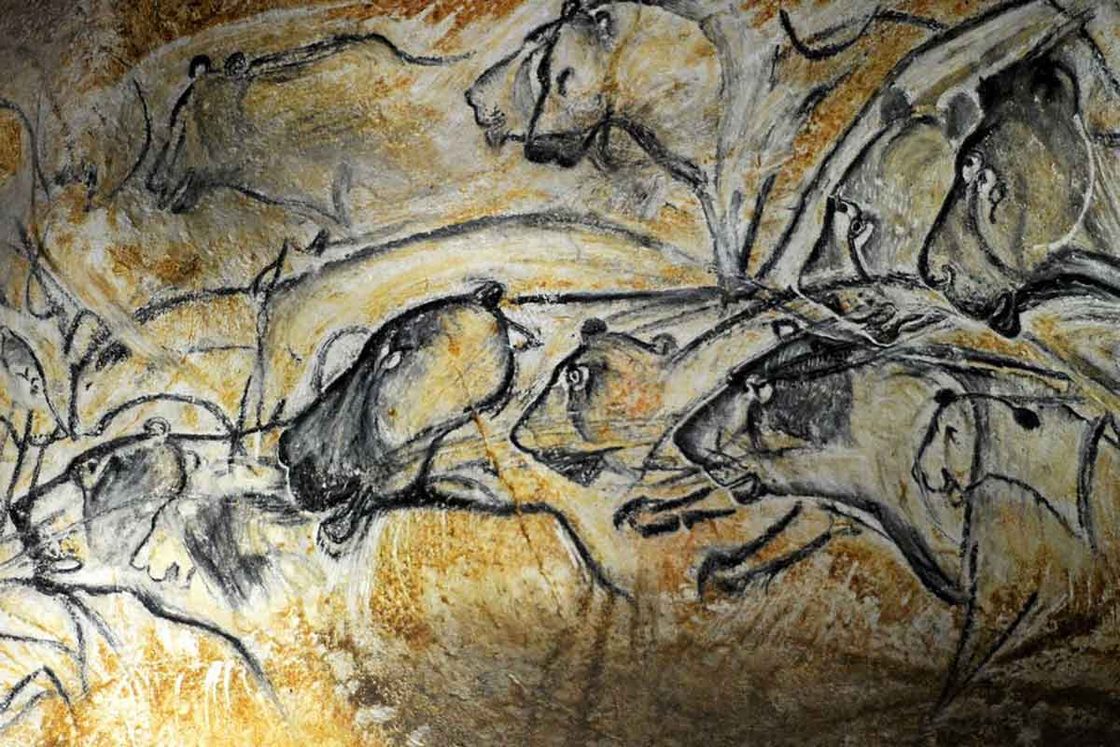
I believe this fundamental urge is clearly visible in the work of children and still exists in adults, although it is seldom given room to express itself. It can come up, as I’ve said, unintentionally when you’re doodling. Doodles are extremely interesting: I think you can find in them traces of our earliest humanity, surfacing in the moments when we’re not thinking about the marks we make.
When I can, I make a practice of reserving 45 minutes a day for simple mark-making, with no intention other than the activity itself. I have colors already prepared and brushes already waiting. I take a piece of cheap oil painting paper and let whatever wants to appear, appear, using the selected colors I had prepared.
And when the work is done, it goes back to the fire. I burn it, to be sure that the only reason I make these marks is the activity itself: to get into that state of fluid work where intuition flows.