Joseph E. Sherriff · Studio letter
15 October 2026
Hello,
From Les Marrons in Saint-Pierre-de-Chartreuse: this week, the second part of my series “Why paint?”, on Arno Stern and his painting game; the “Drawing basics” workshop next weekend, 24–25 October; and a featured artist, Kathleen Hudson.
1) Why paint? (part 2) — Arno Stern and the painting game
Last week, in part 1, “In the beginning there was fire”, I wrote about the very first marks. Here is someone who spent his life watching those marks appear.
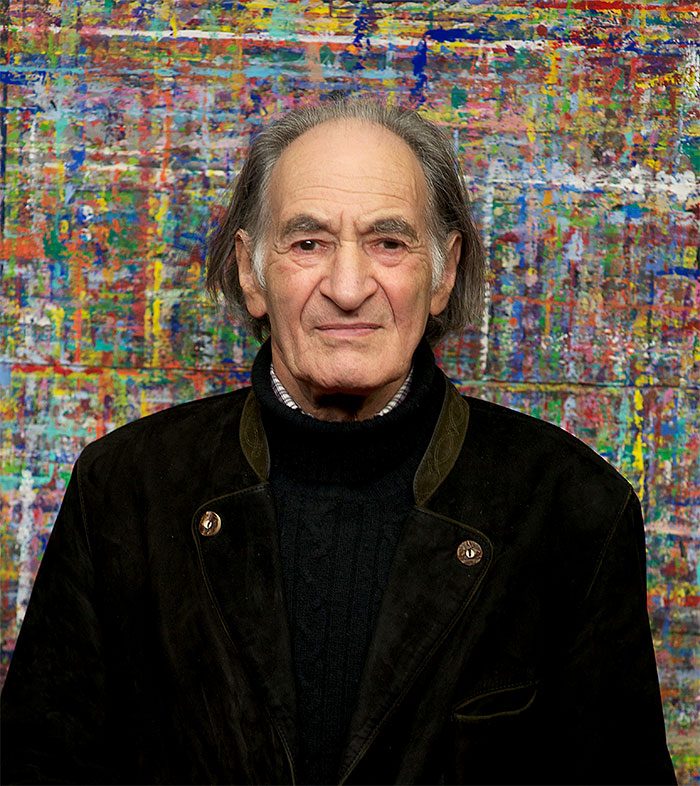
Arno Stern was born on 23 June 1924 in Kassel, Germany. In 1933 his family fled Nazism and settled in France; he survived the war years as a refugee, living in hiding and interned in a labour camp. In 1946, near Paris, he was asked to look after children in a home for war orphans. He gave them paper and paint, and noticed something that would shape the rest of his life: the children’s pictures were richer and more personal when nobody suggested a subject.
In 1949 he opened a studio in Paris, the Académie du Jeudi, and gradually defined what he called the Closlieu — the “closed place”. It is a simple room without windows, protected from the outside world. Sheets of paper are pinned to the walls. In the centre stands the table-palette: 18 colours, each with three brushes, ready to use with no preparation. Children and adults of all ages paint side by side, standing at the wall.
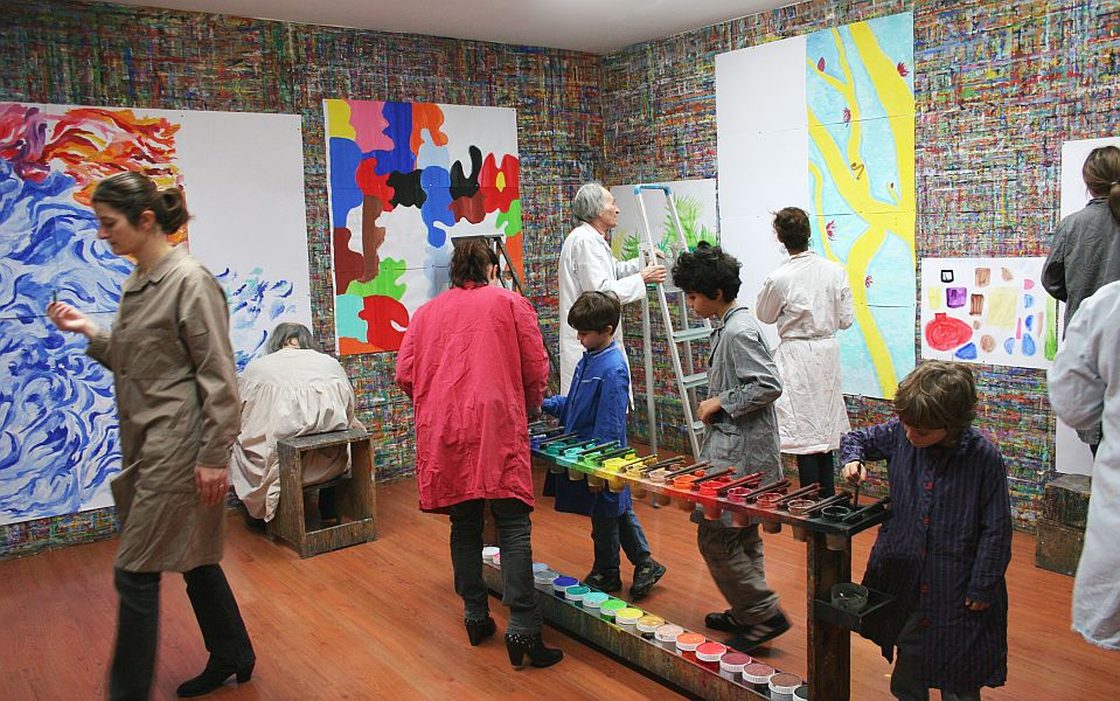
The Closlieu
The rules matter as much as the room. Nobody comments, corrects or praises. No subject is set. Each person decides alone when a painting is finished. And the paintings never leave the studio: they are not taken home, not exhibited, not shown to parents. Stern insisted this was not art therapy, nor art lessons, but a game — the “Jeu de peindre”, the painting game.
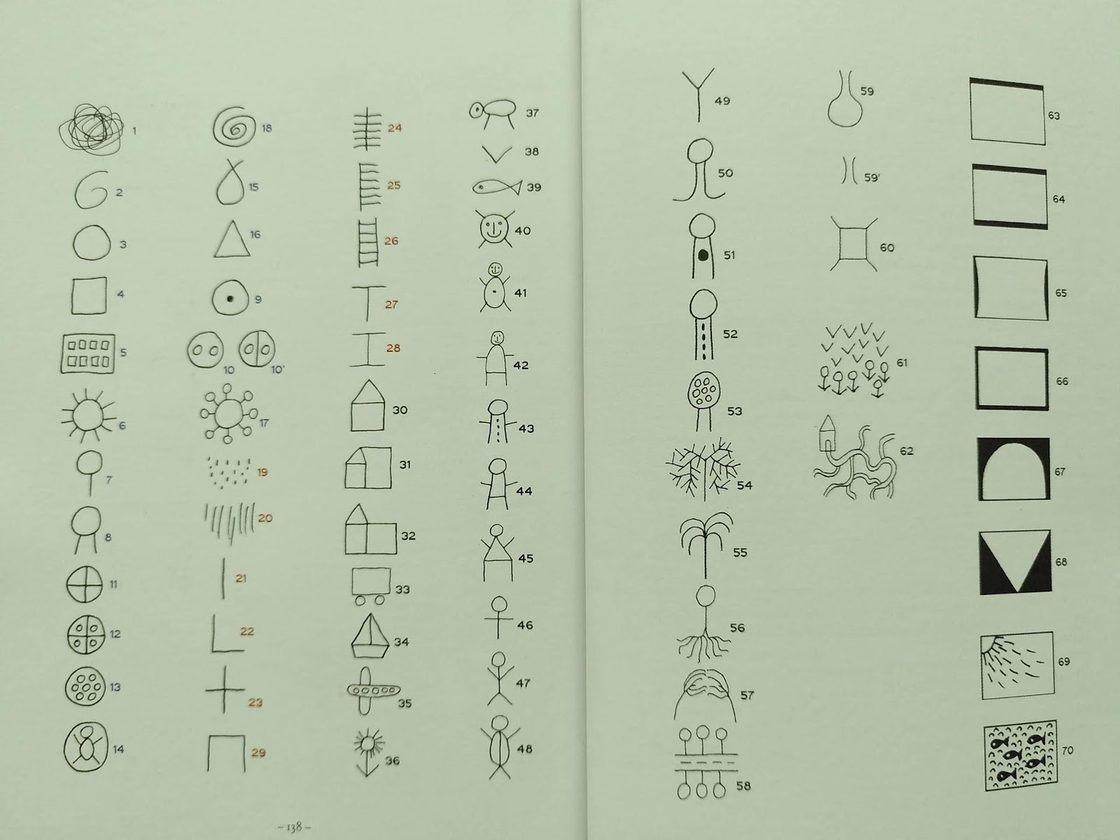
Over decades of watching people paint, and on journeys between 1966 and 1972 to people who had never seen our images, he found the same figures appearing again and again, in every culture. He called this “la Formulation”: a universal code of traces — around seventy forms — rising from what he called organic memory, not from imitation. For him, spontaneity is not something to be taught; it is something we lose under the weight of expectations, and can recover when the conditions are right. He called his approach “creative education”: the opposite of conditioning to dependence, an initiation into autonomy.
Arno Stern died at Chouppes, in the Vienne, on 30 June 2024, a week after his hundredth birthday. His wife Michèle and their children carry his work on.
Sources: arnostern.com · BnF · Wikipédia
2) Technical thoughts — Before the Painting Begins: Composing the Scene
In front of a mountain stream, the hardest decision is rarely which colour to mix. It is what to leave out. A river offers far more than any panel can hold: rocks, spray, moss, light flickering through the trees. A painting begins the moment its edges are chosen.
The edges of a picture are more than a frame. They are the first act of composition. Shifting the framing by a few centimetres can change a painting completely. A rock that felt heavy in a corner becomes the anchor of the whole scene, and a bright patch of foam near the edge pulls the eye straight out of the picture. Time spent here, often on several small thumbnails, is never wasted. What is included matters, but what is excluded matters just as much. Leaving things out is where a painting gains clarity, and often its poetry.
The next question is what made the scene worth painting. Usually it is one thing: the curl of water over a stone, a glow of turquoise in a pool, light catching on wet rock. That becomes the centre of attention, and everything else in the painting should serve it. This one area deserves the greatest precision, the crispest edges and the most careful observation, while the rest settles back, softer and quieter.
Contrast is what makes this work. The eye goes first to where the strongest differences meet: light against dark, warm against cool, sharp against soft, saturated against grey. When contrasts are scattered evenly across a painting, the eye wanders and nothing feels important. When the strongest contrast is saved for the centre of attention and everything else is calmed down, the painting breathes.
Finally, there is the path the eye will travel. Rivers are ideal for this, because the water itself is a path. A diagonal of moss, a line of stones or the direction of the current can lead the viewer in, carry them to the centre of attention, and then let them wander gently around the picture rather than out of it. Lines running straight into a corner deserve special caution. They act like an exit door.
None of this is a rule to apply mechanically. It is a way of looking. Faced with any scene, it helps to frame it with the hands, ask what is truly compelling in it, and notice where the eye lands first. That is where the painting begins.
3) Next weekend — workshop: “Drawing basics”, 24–25 October
Saturday 24 and Sunday 25 October 2026 · 10:00–17:00
Maison Prataz, Les Échelles
50 rue Jean-Jacques Rousseau, 73360 Les Échelles
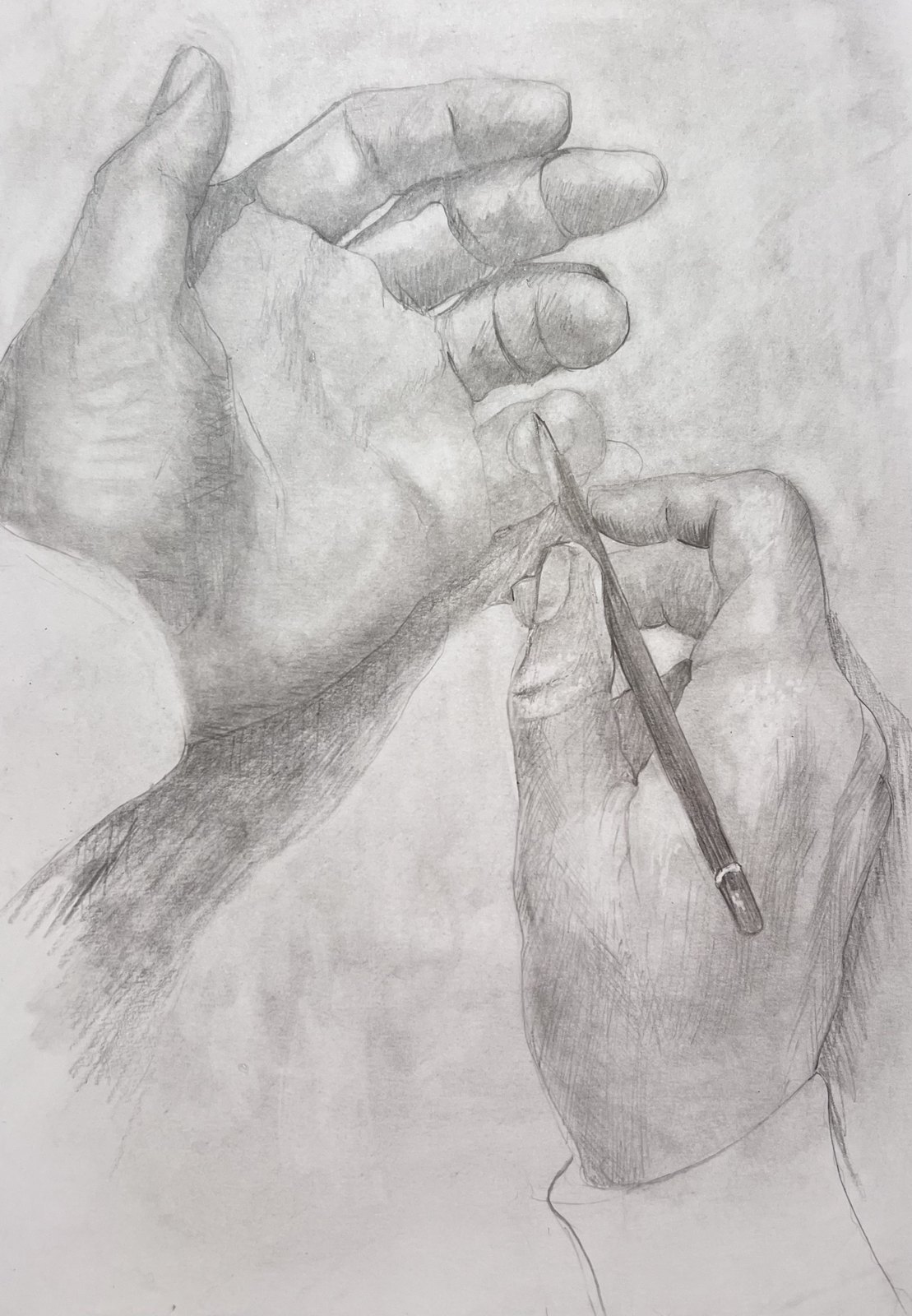
Two days back to the fundamentals: on day one, freeing up how you see with Betty Edwards’ exercises (“Drawing on the Right Side of the Brain” — upside-down drawing, negative space, contour); on day two, classical construction — layout, proportion, values, volume — applied to a finished drawing. Open to everyone, teenagers and adults, including those who think they “can’t draw”. (Taught in French.)
€120 for the two days + Maison Prataz membership (€15 individual / €20 family). Basic materials provided. 6 participants maximum. A few places left? Contact me directly to book: joseph.e.sherriff@gmail.com · +33 6 45 76 97 36
Details: artstage.fr
See your composition with fresh eyes
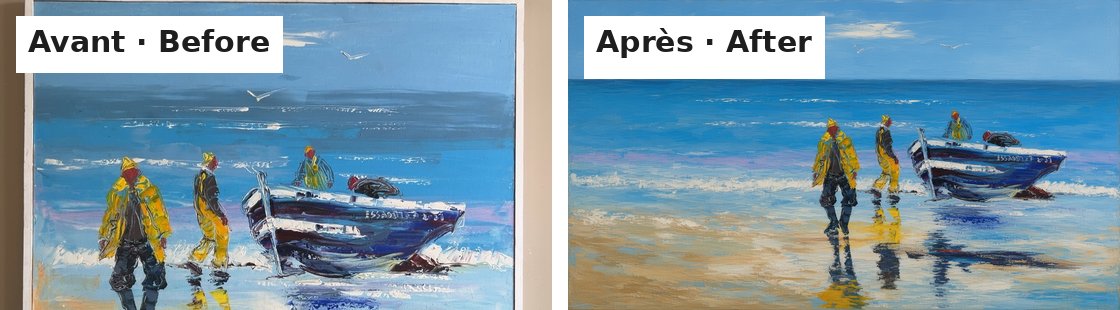
Upload a photo of your painting. Composition Studio reads the balance, focal point and how the eye moves through the picture, then suggests concrete fixes. You decide what to keep. 7-day free trial, then Premium at €3.75/month.
| Analyse my painting |
4) Featured artist — Kathleen Hudson
Kathleen B. Hudson (born 1986) is an American landscape painter who lives and works in Colorado Springs, Colorado. She paints in oils, both in the studio and en plein air, and her subject is light and atmosphere: “the brief point during a sunrise when the sun fills the air with an ethereal golden glow; a break in a storm where light pierces through heavy clouds,” as she puts it.
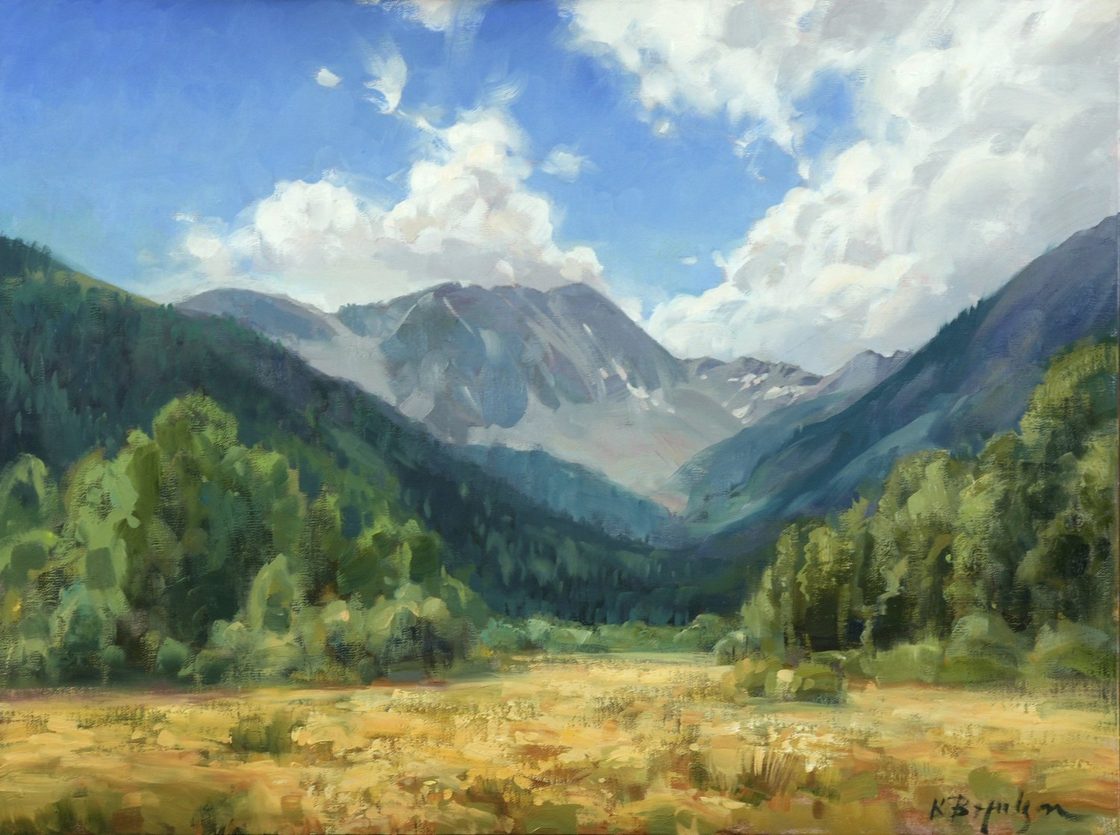
Kathleen B. Hudson, Castle Peak, High Summer, oil on linen panel, 18×24 in.
She says she began painting as soon as she could hold a brush, and that oils became her medium in middle school, when she painstakingly copied paintings by John Singer Sargent. She studied at Harvard (class of 2009). Her painting Bright Morning, Timberline Falls won the Grand Prize of the PleinAir Salon and was on the cover of PleinAir magazine in July 2017. She is a Signature Member of the Plein Air Painters of America and the second-youngest artist ever elected a Fellow of the American Society of Marine Artists; her work is in museum and private collections on four continents.
What I like is her honesty about painting outdoors. “It is not remotely relaxing,” she told Harvard Magazine. “It excites me, and I’m happy doing it, but it’s kind of a battle.” And on why we do it: “I’m looking for something that stops me in my tracks… There is something deeply human about being moved by our natural surroundings.”
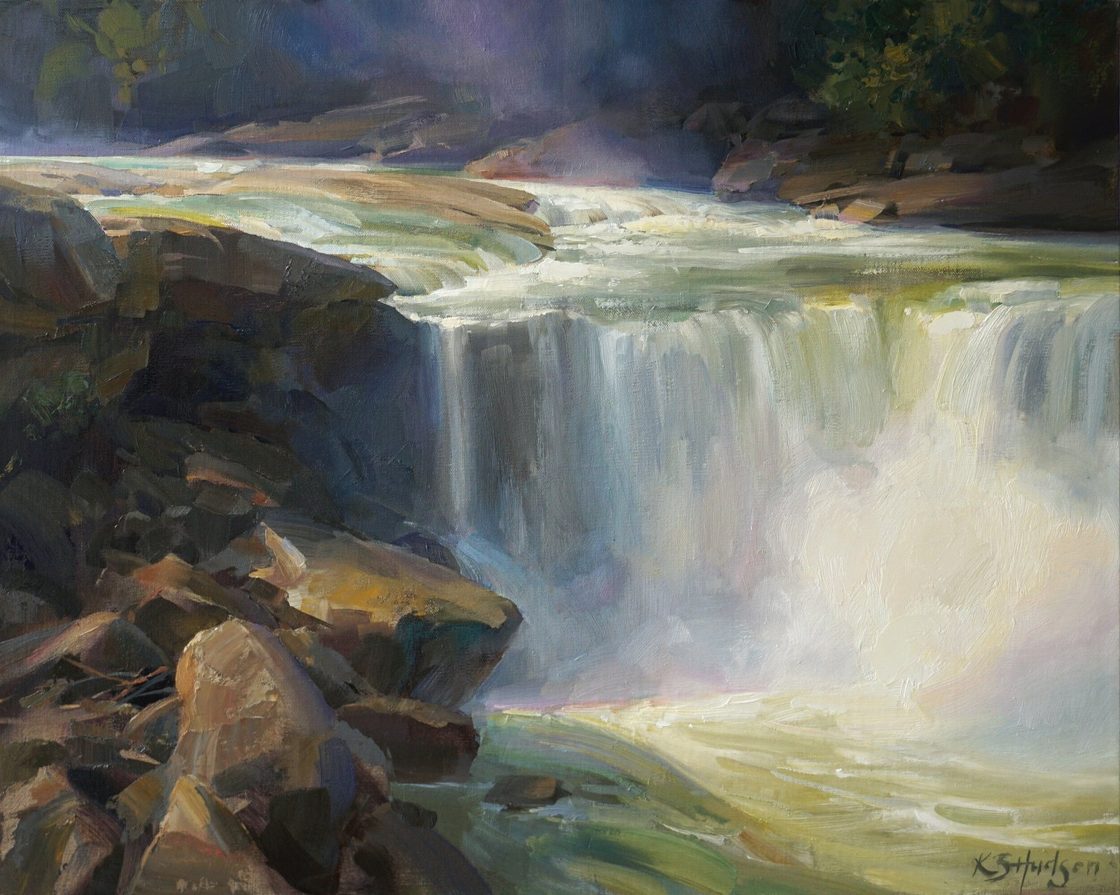
Kathleen B. Hudson, Morning Light on Cumberland Falls, oil, 16×20 in.
Much of her time now goes into developing field studies and reference photos into larger studio works. She also teaches plein air workshops on value, composition and atmosphere.
Her paintings: kathleenbhudson.com · Harvard Magazine, 2024
5) Shop
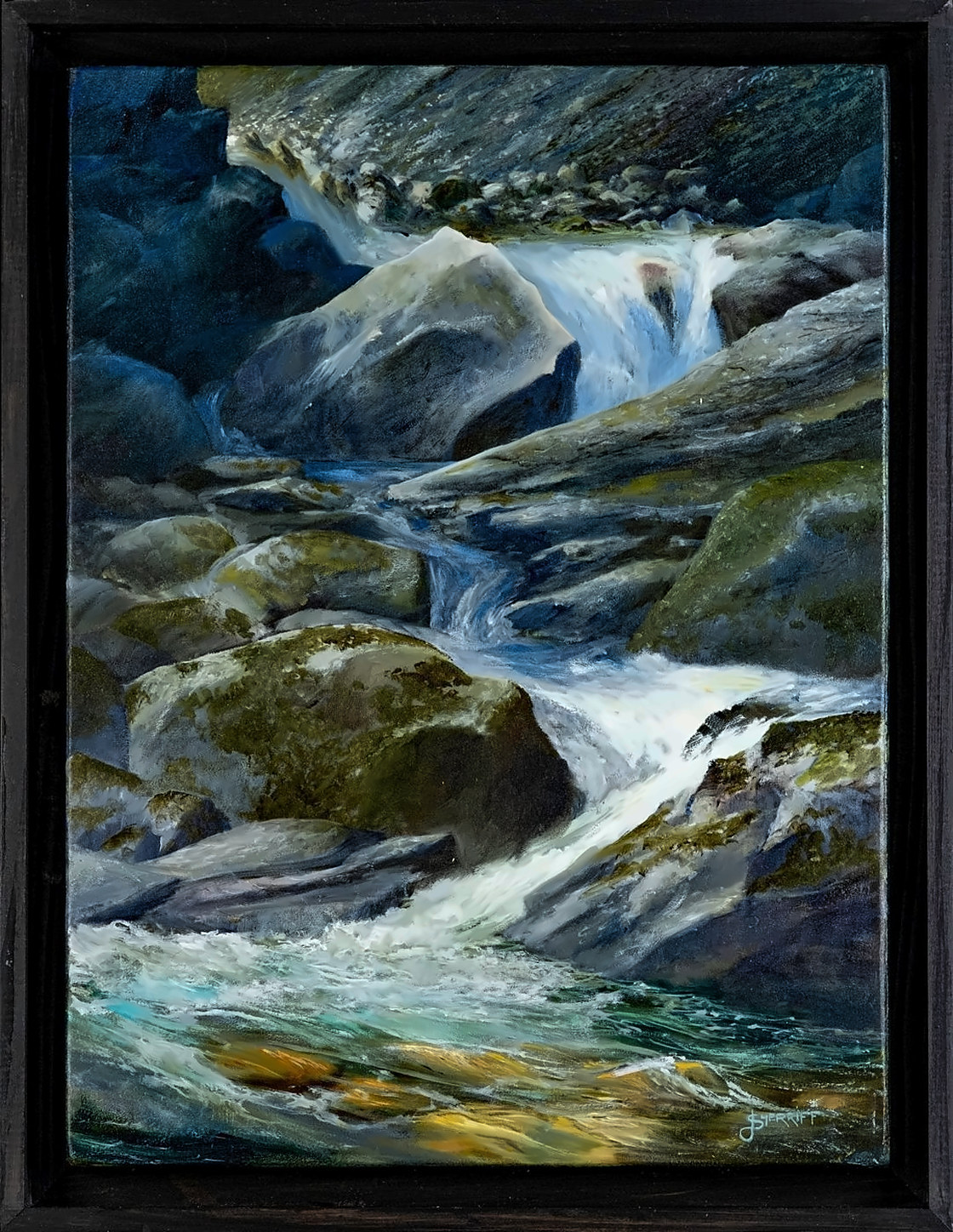
Morning light — Imagined scene, high mountains
Oil painting · €480.00
View the painting →
An imagined high-mountain torrent in the cold, low light of early morning: few colours, a pared-down composition. More plein-air oils at joseph-sherriff.com/en.
Thanks for reading. See you on 24–25 October in Les Échelles if you’re coming to draw.
Joseph E. Sherriff
Atelier Les Marrons · 34 chemin Isidore · Saint-Pierre-de-Chartreuse
joseph-sherriff.com
joseph.e.sherriff@gmail.com · +33 6 45 76 97 36