Joseph E. Sherriff · Studio letter
8 October 2026
Hello,
From Les Marrons in Saint-Pierre-de-Chartreuse: Festiv’Art and the talk are behind us — thank you! On Saturday it’s the one-day “Painting river landscapes” workshop at Les Échelles, and a new “Drawing basics” workshop follows on 24–25 October. Also in this letter: a piece on the very first marks, “In the beginning there was fire”, a few words on Composition Studio, and a featured artist, Clyde Aspevig.
1) Festiv’Art and the talk — thank you
2–4 October 2026
Festiv’Art Chartreuse 2026 — “L’eau et le lien” (Water and connection)
Salle des fêtes du Revol, Saint-Laurent-du-Pont
Festiv’Art was last weekend. I hung a collection of oils from the Gorge du Guiers Mort and the Cirque de Saint-Même, and on Saturday 3 October I gave my talk “Feeling calmer with art” at the Maison des Arts. Thank you to everyone who stopped by the stand or came to the talk.
Thank you to Priscilla, Yann and Allan for the very professional and friendly organisation.
2) Saturday — workshop: “Painting river landscapes”
Saturday 10 October 2026 · 10:00–17:00 · one day
Maison Prataz, Les Échelles
50 rue Jean-Jacques Rousseau, 73360 Les Échelles
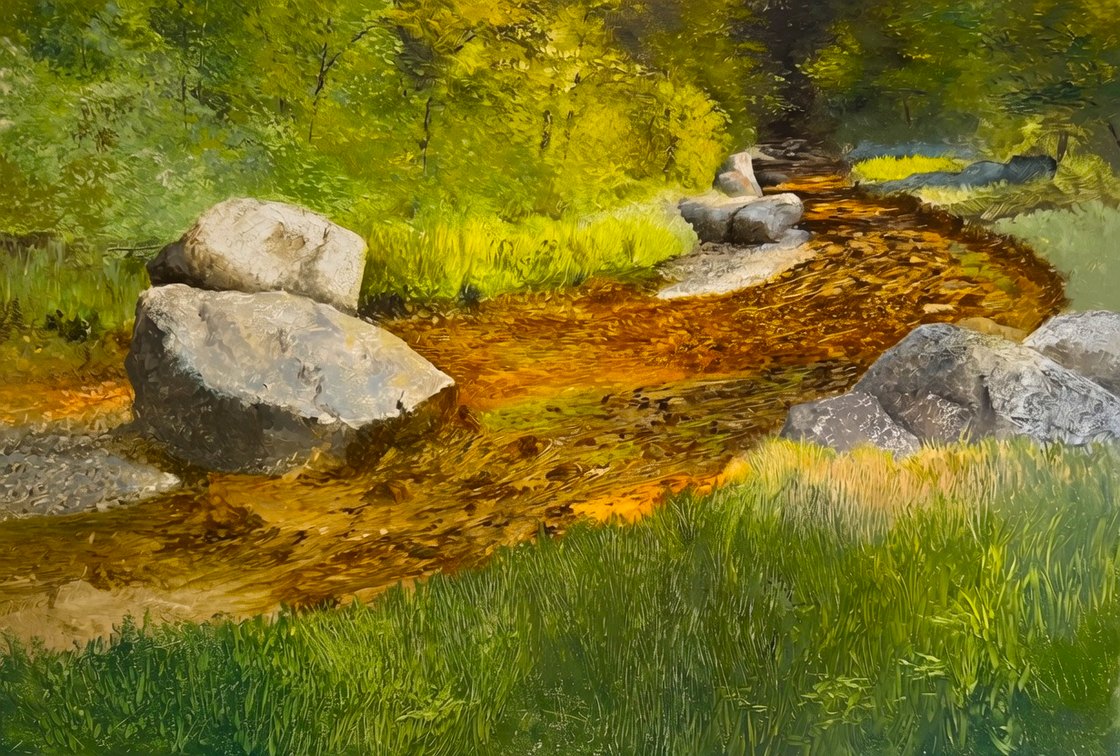
A studio day on painting moving water: framing, values and the structure of the landscape, then reflections, transparency and textures. We work from photos only. Oil or acrylic, all levels, 6 participants maximum.
Places are limited: if you’d like to come, contact me directly.
€60 for the day, plus Maison Prataz membership: €15 (annual) or €5 (for the day). Oil paint and brushes provided if needed: €5. To book: joseph.e.sherriff@gmail.com · +33 6 45 76 97 36
3) New — workshop: “Drawing basics”, 24–25 October
Saturday 24 and Sunday 25 October 2026 · 10:00–17:00
Maison Prataz, Les Échelles
50 rue Jean-Jacques Rousseau, 73360 Les Échelles
Two days back to the fundamentals: on day one, freeing up how you see with Betty Edwards’ exercises (“Drawing on the Right Side of the Brain” — upside-down drawing, negative space, contour); on day two, classical construction — layout, proportion, values, volume — applied to a finished drawing. Open to everyone, teenagers and adults, including those who think they “can’t draw”. (Taught in French.)
€120 + Maison Prataz membership. Basic materials provided. 6 participants maximum. To book: joseph.e.sherriff@gmail.com · +33 6 45 76 97 36
Details: artstage.fr
And in spring: “Composition”, 16–17 May 2027, also at Maison Prataz.
4) In the beginning there was fire
In the caves of Africa, and more specifically in South Africa, archaeologists have found traces of fire dated to 1.8 million years ago. It’s probable that fire was used long before that; these are only the traces we have found. Where you have fire, you have charcoal. Where you have the young of any mammal species, you have play, and where you have human play, you have curiosity.
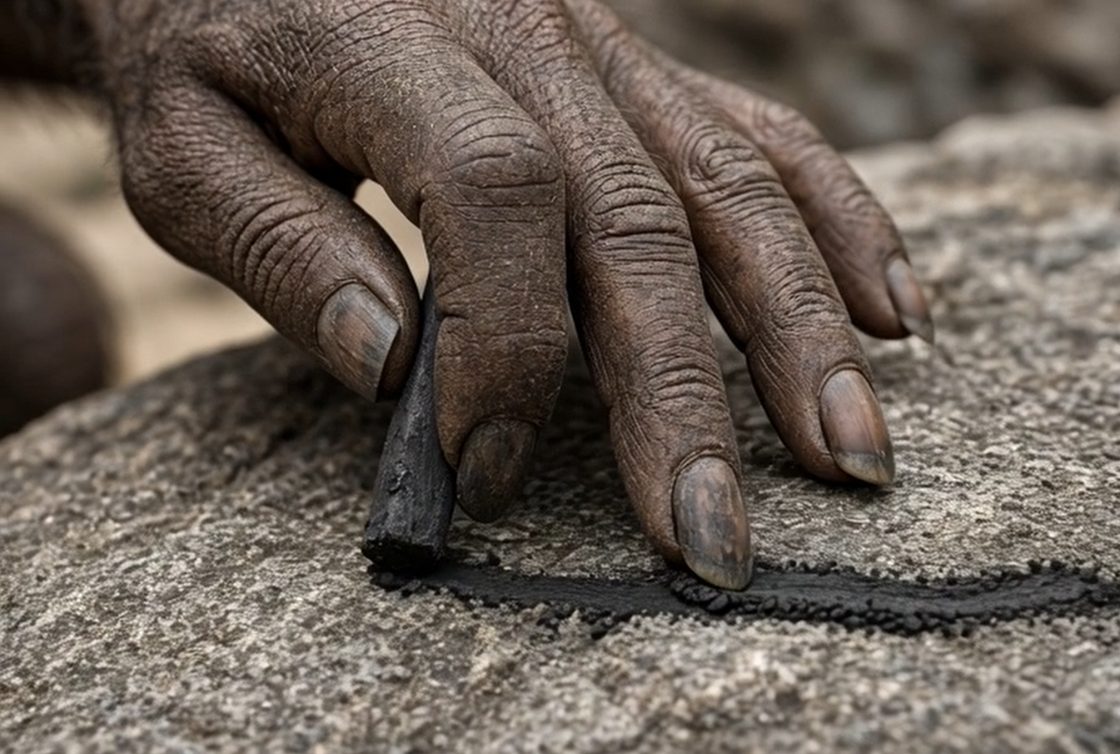
Imagine the fingers of some Homo erectus child picking up those little pieces of charcoal and starting to make marks on the walls of the cave, maybe 2 million years ago. I imagine that for the longest time, they only made marks, but at some point in our ancestors’ evolution, somebody decided to make a very long mark. That very long mark is where thought entered into movement, and abstraction became visible for the first time.
If you can make one line, you can make two, three, or many lines: 1, 2, 3, many. That is the beginning of mathematics, and if you’re drawing lines on a surface, it is also the beginning of geometry. You can make a grid. You can make triangles, squares, any kind of geometric shape, and you can make circles. You can put one circle inside another, or one circle around other things. You can put a cross that marks the middle of a circle.
These are fundamental formulations that still appear today in children’s spontaneous artwork, and in the kind of spontaneous marks you might make yourself when you’re doodling while talking on the telephone. There is a fundamental, ancient human drive to make marks.
Somebody, sometime, made a circle and put two small circles inside it, and maybe jumped back in astonishment to see a face looking back. Add a little mark for the mouth, and the resemblance is complete.
The first representation: the magic of images. The image comes alive. Now you add, the way children do:
– hands, then arms
– feet, like stars, with toes
– legs
– a body
– maybe some hair, some ears
You’re getting pretty good. You can start to draw animals too. You can take red earth, yellow earth, maybe white earth like clay or chalk, and paint pictures of monumental size and breathtaking beauty, without ever considering a notion called art, because what you’re doing is simply a pure expression of life.
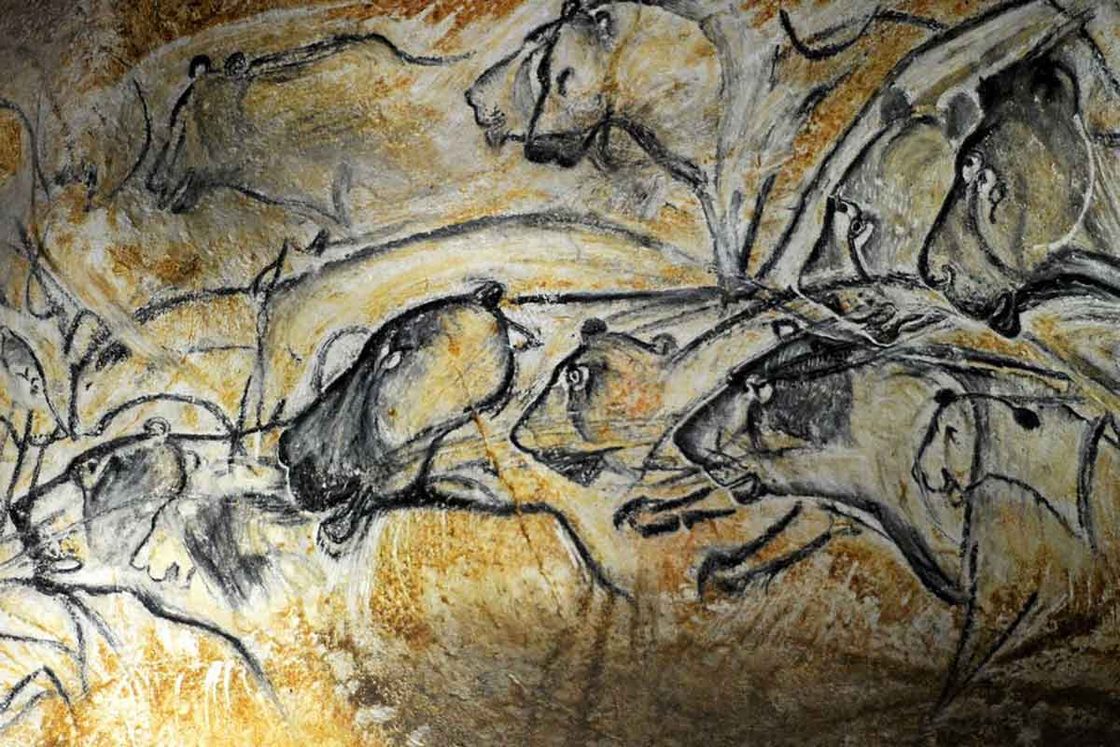
I believe this fundamental urge is clearly visible in the work of children and still exists in adults, although it is seldom given room to express itself. It can come up, as I’ve said, unintentionally when you’re doodling. Doodles are extremely interesting: I think you can find in them traces of our earliest humanity, surfacing in the moments when we’re not thinking about the marks we make.
When I can, I make a practice of reserving 45 minutes a day for simple mark-making, with no intention other than the activity itself. I have colors already prepared and brushes already waiting. I take a piece of cheap oil painting paper and let whatever wants to appear, appear, using the selected colors I had prepared.
And when the work is done, it goes back to the fire. I burn it, to be sure that the only reason I make these marks is the activity itself: to get into that state of fluid work where intuition flows.
5) Composition Studio — the principles, and your own judgement
The principles of composition are universal. You find them in a Renaissance fresco, a Corot landscape, a Japanese woodblock print or an abstract canvas: the balance of masses, leading lines, rhythm, values, the path the eye takes through the picture. Eras, styles and media change; the principles remain. I built Composition Studio, the first of my ClearIdeas tools, to help painters see them.
How does it work? You sign in, then upload a photo of your painting — or photograph it directly with your phone. You can choose one or more stylistic preferences (classical/academic, impressionist, expressionist, modern/abstract, realist, or a landscape, portrait or still-life focus), and the analysis takes them into account. You click “Analyze composition”, and the feedback comes in three parts: what works well, opportunities for improvement, and related artists whose work you can go and look at. The tone is meant to be clear and kind: a helpful studio conversation.
To go further, advanced features (using credits) let you generate suggested versions of your painting — subtle, clear or strong changes — each with what changed and why; adjust warm/cool, gray/chroma, edge, light/dark and near/far contrast; show a rule-of-thirds grid; or open a salience map that shows where the picture draws the eye, and trace an eye path on it.
But the point is not for the app to decide for you. The point is that, painting after painting, the principles move from the screen into your own eye: that you understand them from the inside, well enough to see them yourself, in front of the motif and at the easel. That is how you become a better painter. For me, the tool unlocks sovereignty: the painter’s own independent judgement and authority over their pictures. Suggestions are only suggestions; you decide what you keep.
Try it with a painting that is stuck, or to open up new possibilities.
App: clearideas.art/composition
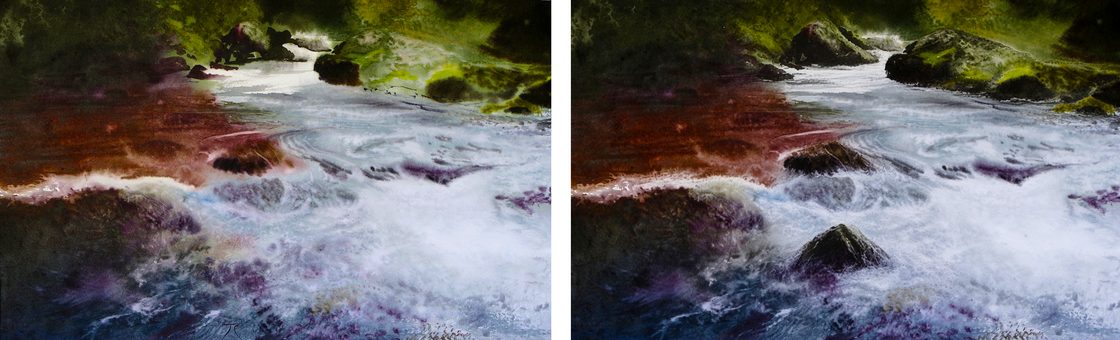
6) Featured artist — Clyde Aspevig
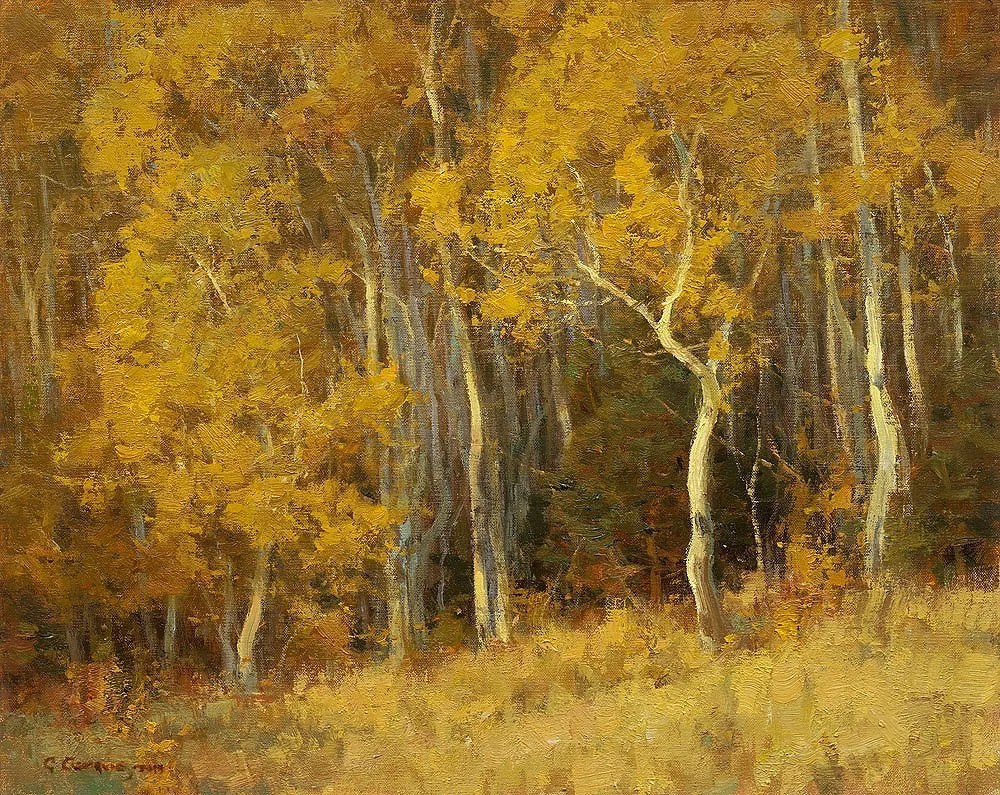
Clyde Aspevig is an American landscape painter, widely regarded as one of the finest contemporary landscape painters, both on location and in the studio. He grew up on a farm near Rudyard, Montana, not far from the Canadian border; his father, a practical but open-minded farmer, bought his first painting when Clyde was twelve. He studied at Eastern Montana College in Billings and now lives near Bozeman with his wife, the painter Carol Guzman.
His field easel has taken him from the mountains and prairies of Montana to Death Valley, the Adirondacks, the rocky North Atlantic coast, the Scandinavian fjords and the hillsides of Tuscany. His paintings are in many museum collections — the Tacoma Art Museum, Denver Art Museum, Gilcrease Museum and Rockwell Museum among them — and his awards include the Prix de West Award (1997) and the California Art Club’s Edgar Payne Award (2013).
What a plein air painter can learn from him:
Look without clichés. “Because I grew up in a vacuum in Montana, I wasn’t taught the cliches,” he says. He resisted dealers who wanted to restrict him to saleable panoramic scenery. In front of the motif, the question is not “what makes a good picture?” but “what am I actually seeing?”
Leave things out. In his view, some of his most powerful pictures are those that leave something out. The sense of space, rhythm and harmony in his canvases is no accident.
Paint the way you’d compose music. “I use music all the time in my paintings.” Think of brushwork in rhythms — broad and slow, quick, accented — rather than in details.
Technique serves the idea. He wants technique never to override a painting’s essential concept. A field study doesn’t need to be virtuosic; it needs to say something.
Among the books he lists as inspiration: Carlson’s Guide to Landscape Painting, a classic for any landscape painter.
Paintings: clydeaspevig.com/collections
Official site: clydeaspevig.com
7) Shop
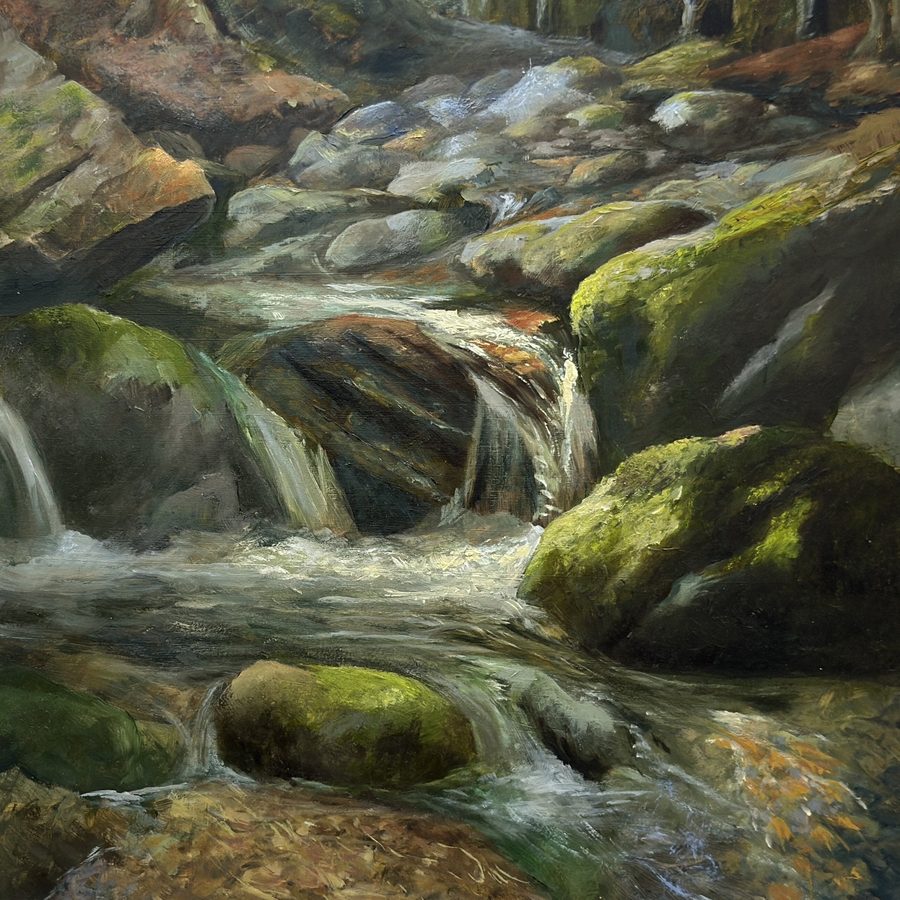
10.11.2025 Autumn walk up the Guiers Mort
Oil painting · €180.00
View the painting →
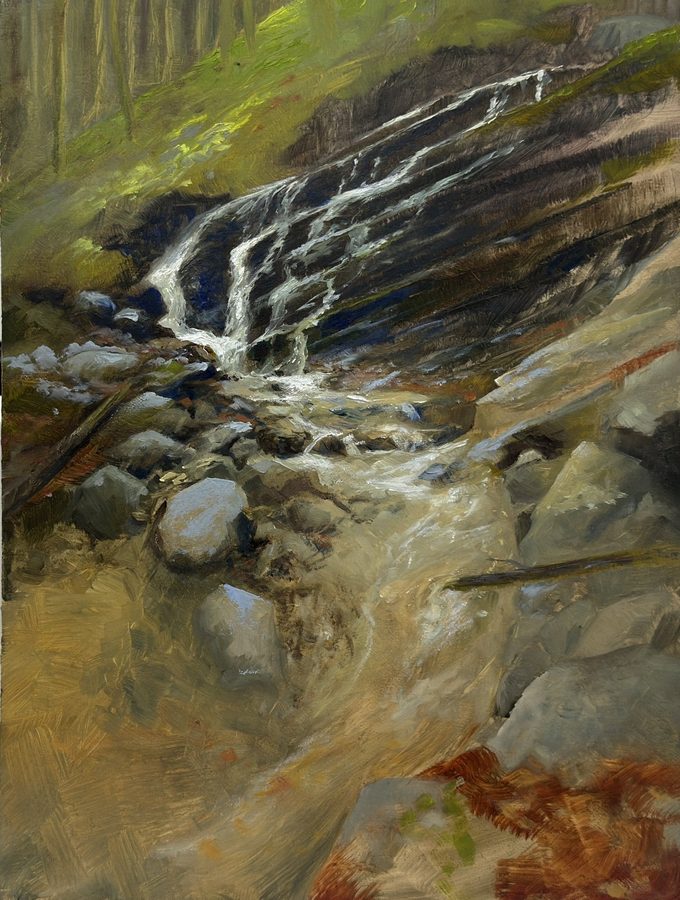
11.11.2025, Petite Vache waterfall — Original oil painting on wood, Chartreuse
Oil on wood · €240.00
View the painting →
Plein-air oils are still available at joseph-sherriff.com. Worth highlighting:
• Vibrations vertes — oil on wood — €480
• Lumière inattendue — oil on wood — €480
• Lumière du matin — €480
• Confluence hivernale, 27 Dec 2025 — oil on wood, Guiers Mort — €420
• Eaux fortes, Guiers Mort, 5 Feb 2025 — oil on canvas — €420
Also online: Fossil Beach (€480), Le courant vif (€420), Ruisseau du Pendu en hiver (€240), Bijou — small study of the Guiers Mort (€180), Reflets du Pendu (€90), Sous la glace (€90).
Thanks for reading. See you on Saturday in Les Échelles if you’re coming to paint the river.
Joseph E. Sherriff
Atelier Les Marrons · 34 chemin Isidore · Saint-Pierre-de-Chartreuse
joseph-sherriff.com
joseph.e.sherriff@gmail.com · +33 6 45 76 97 36