| Last week's article argued that a painting begins when its edges and its centre of attention are chosen. A simple tool makes that decision quicker and more reliable on location: the viewfinder. |
| It need not be elaborate. A sheet of clear plexiglass, framed to a fixed proportion (often 2:3, to match the painting board), with a cross drawn through the centre to divide the view into four quadrants. A grid of thirds, or even quarters, can be added as well. |
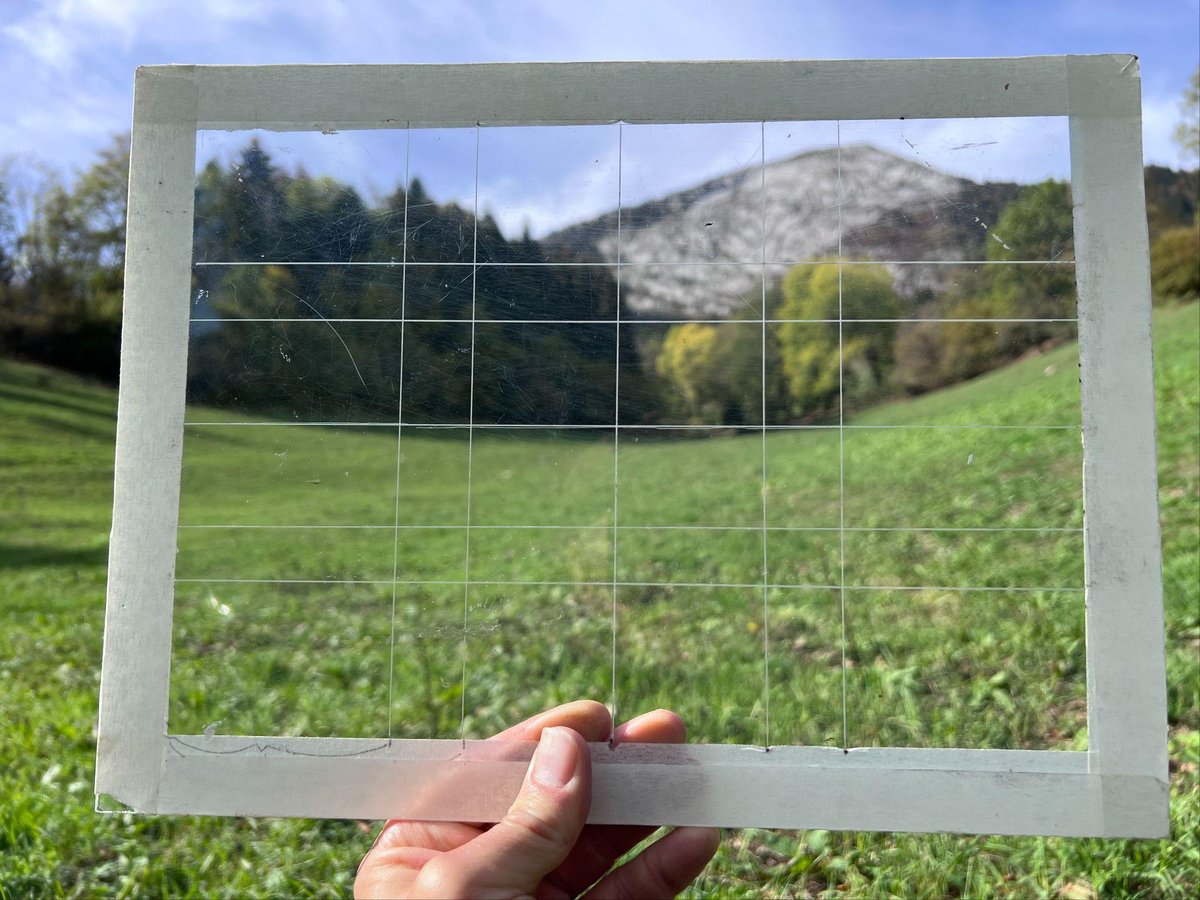 |
| The viewfinder: framed plexiglass with its grid, held up to the scene. |
| Held up in front of the scene, the viewfinder can be moved closer or further away, left or right, and the composition changes in real time. A rock slides into a corner, a pool of light lands near a third, a distracting branch disappears out of frame. Because the proportion matches the board, what appears through the plexiglass is what will be painted. There are no surprises later from a painting that turns out too tall or too cramped. |
| Once a framing is chosen, everything must stay still. Neither the eye nor the viewfinder should move while the marks are made. A shift of the head by a few centimetres, or a frame that drifts, and every reference slides out of place. Bracing the viewfinder against something steady, keeping the elbow tucked in, and closing one eye to look from a single fixed point all matter. |
| The major references are then marked directly on the plexiglass with a fine marker: the line of the far bank, the edge of the main rock, the curve of the current, and the spot that will become the centre of attention. |
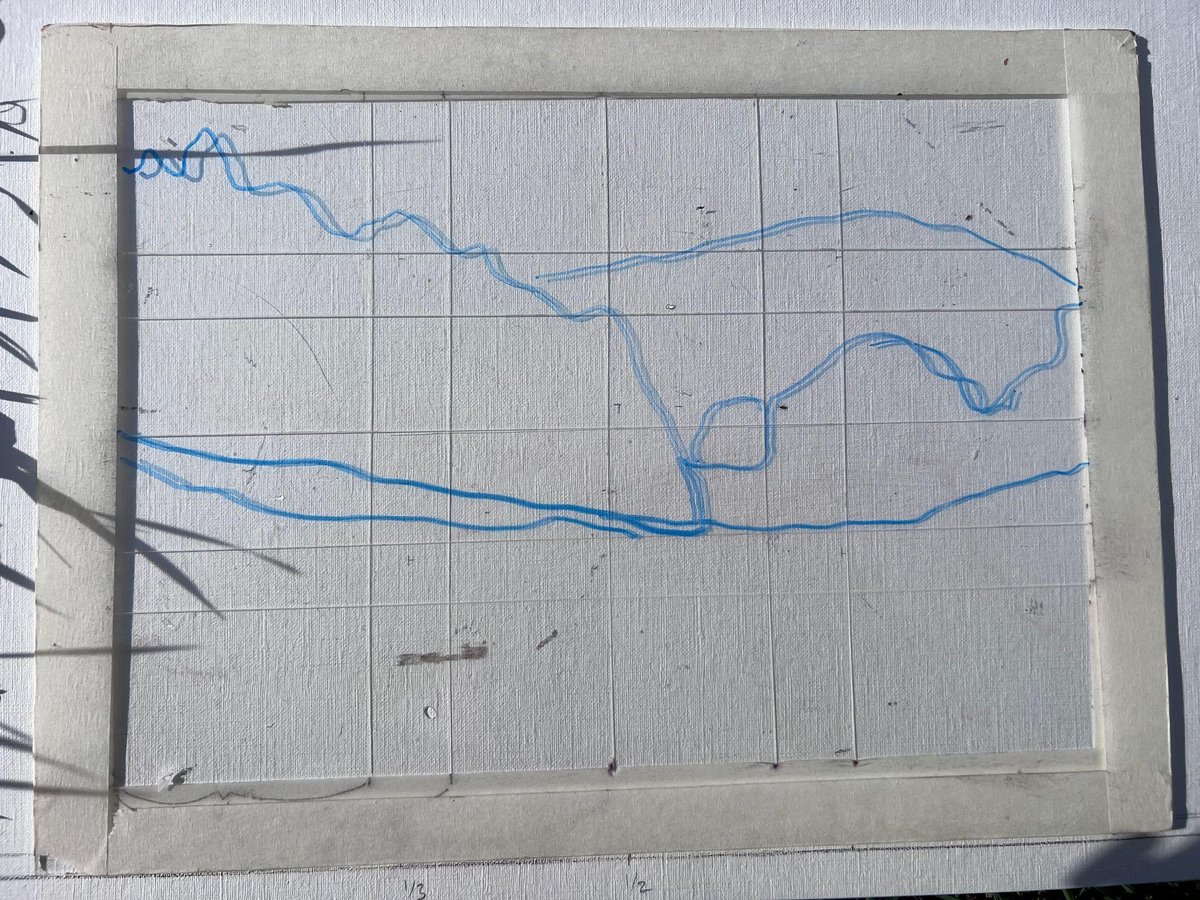 |
| Reference marks drawn on the plexiglass. |
| These marks are simple placemarkers, nothing more: a dot, a short line, a rough contour. The temptation to draw every stone and ripple is strong and should be resisted. Detail at this stage only gets in the way. A composition works through positioning and a few simple, strong shapes. If the big masses are in the right place, the painting will stand. If they are not, no amount of detail will save it. |
| The painting surface (paper, canvas or board) carries the same reference points as small dots where the centre lines and thirds cross. Because both surfaces share the same grid, transferring the marks is straightforward: a rock just left of the centre cross, a bank meeting the edge a little below the upper third. Each is placed in pencil or thin, diluted paint, again as simple shapes, and checked against the viewfinder. |
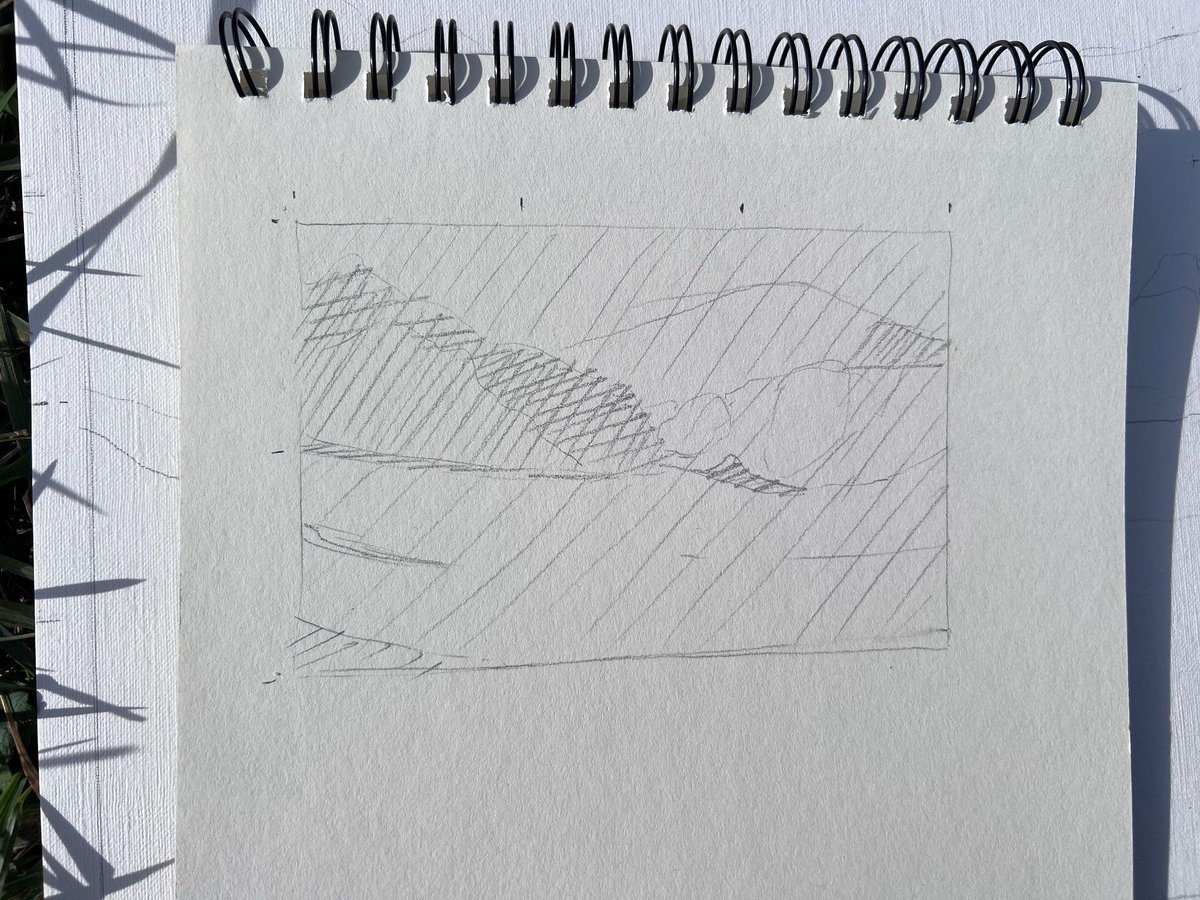 |
| A simple value study |
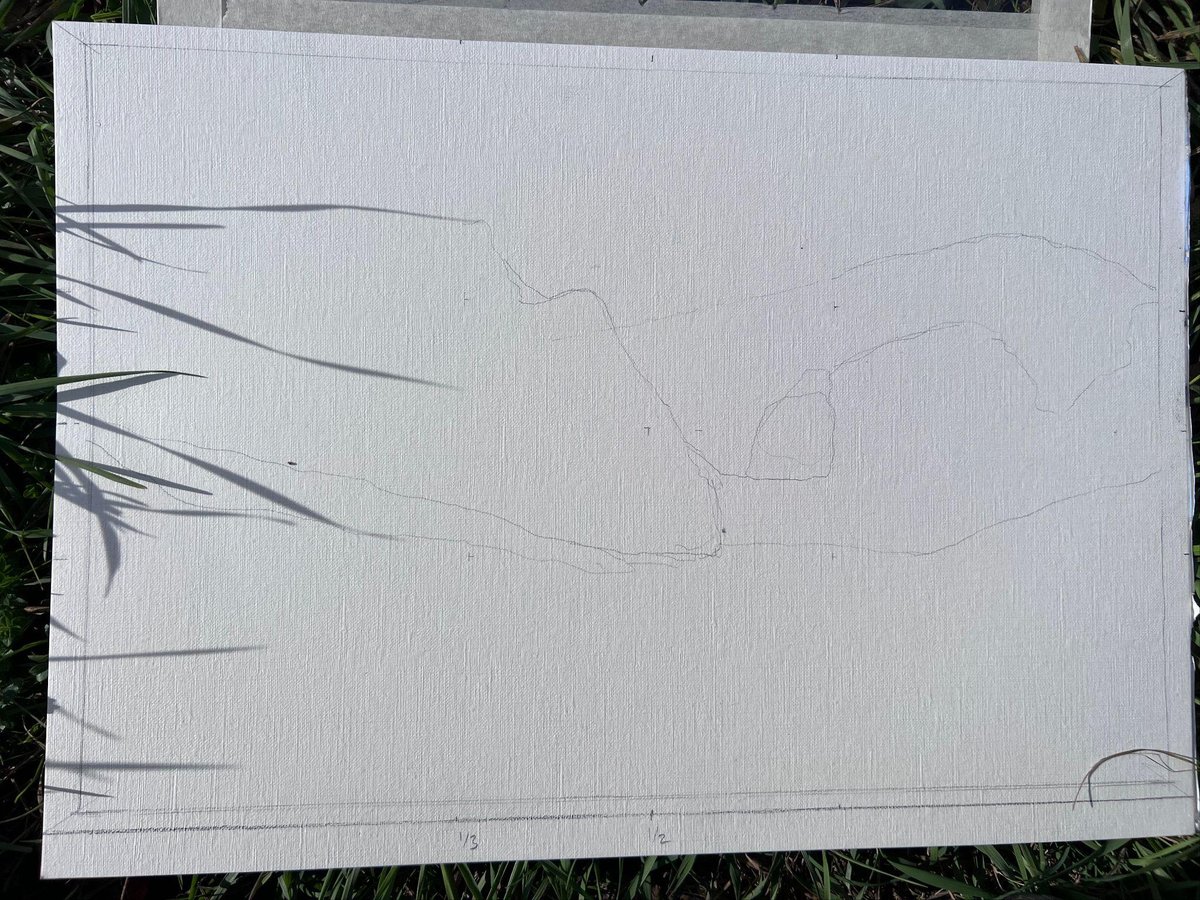 |
| Transferring to the board. |
| Within fifteen minutes at most, a usable composition is drawn on the board. It is simple and light, with nothing precious about it yet, but the big decisions are made and anchored. Outdoors, where the light keeps moving, the energy for careful thinking is best spent at the start. |
| The viewfinder does not make the choices. It helps reduce and organise the information just enough for them to be grasped deliberately, and helps lay in the big shapes. |
| With the composition in place, the next step is deciding where the lights and darks will go: the value study, the subject of next week's article. |
From the letter of 23 October 2026
Lire en français