| Joseph E. Sherriff · Studio letter |
| 23 October 2026 |
| Hello, | | From Saint-Pierre-de-Chartreuse: this week, a featured artist: William Turner; my workshop programme; a practical follow-up to last week’s piece on composition, on using a viewfinder outdoors; and part 3 of “Why paint?”. | 1) Featured artists — J.M.W. Turner: Painting Light Itself| Today I want to feature an artist who many of us find inspiring through his use of light and mist painting almost abstractly in the early 19th century. I admire his courage to paint in a way that nobody had ever tried before him, breaking convention and always true to artistic necessity. | | In the summer of 1802, the Peace of Amiens briefly reopened the Continent to British travellers, and the 27-year-old Joseph Mallord William Turner set off for the Alps. It was his first journey abroad, and the Tate calls it arguably the formative experience of his life. Approaching Grenoble along the Isère, he made a detour into the Chartreuse, which he found "abounding with romantic matter". His sketchbook from that tour, now at the Tate, holds drawings of the Gorges du Guiers Mort: Fourvoirie, Pont Pérant, the Pic de l'Oeillette, a bridge over a mountain stream. | | That is my river. I paint the Guiers Mort, en plein air, most weeks of the year, and it moves me that Turner stood in the same gorge more than two centuries ago. Look closely at his drawing: on grey-buff paper, in pencil and chalk, the only touches of white gouache are on the water. The torrent is the light source of the whole sheet. When I set up my easel by the river, that is what I am hunting for too: the moment the water catches the light and becomes the brightest thing in the valley. | 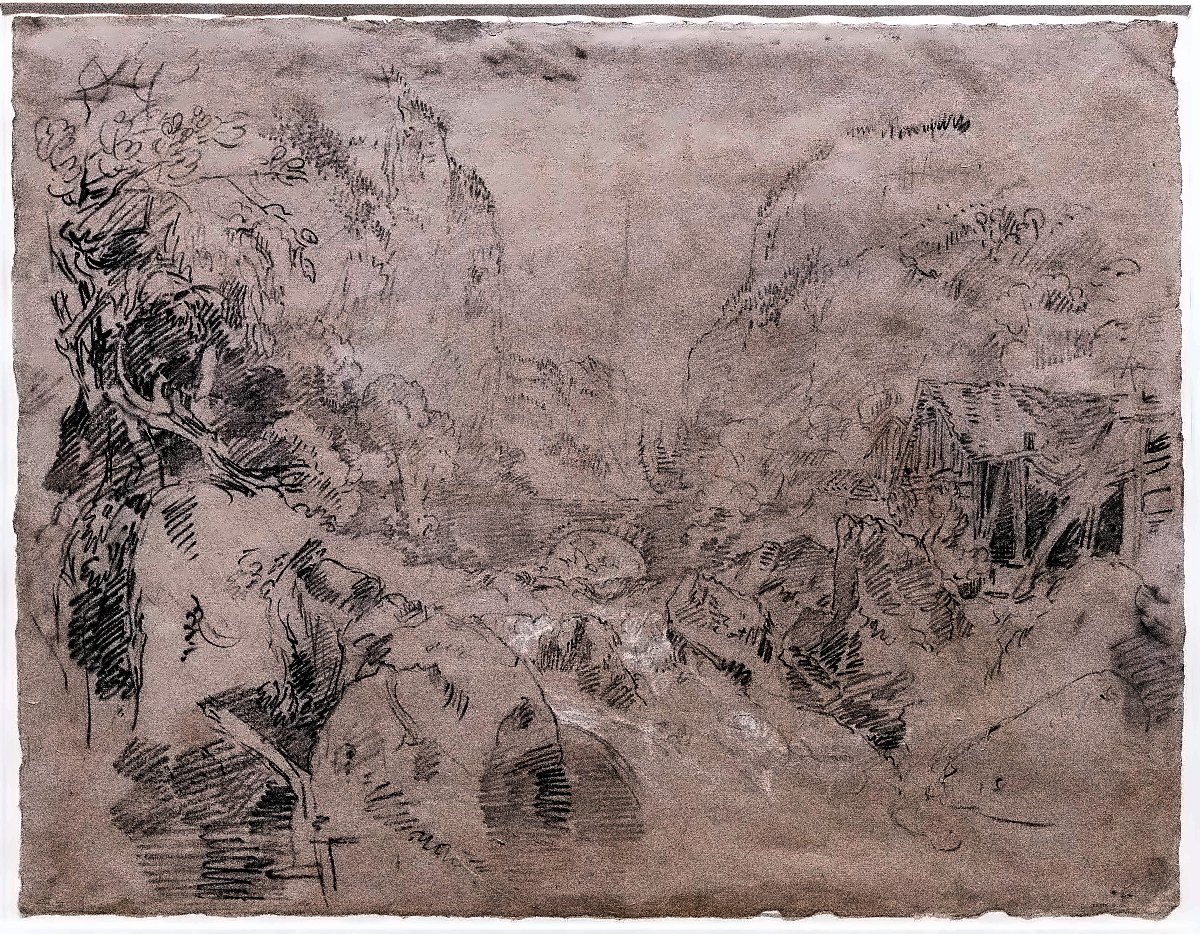 | | J.M.W. Turner, A Bridge over a Mountain Stream: Gorges du Guiers Mort, Chartreuse, 1802. Pencil, chalk and white gouache. Tate (Turner Bequest). Photo via Wikimedia Commons, public domain; contrast lightly adjusted. | | Turner did not forget the gorge. Around 1812–15, drawing on his Chartreuse studies, he made a watercolour of a mill in the valley, engraved for his Liber Studiorum and published on 1 January 1816. John Ruskin noticed the choice: “Another than Turner would have painted the convent… He painted the mill in the valley.” I understand him: it is the torrent and the light in the glen, not the monastery, that keep drawing me back to the Guiers Mort. | 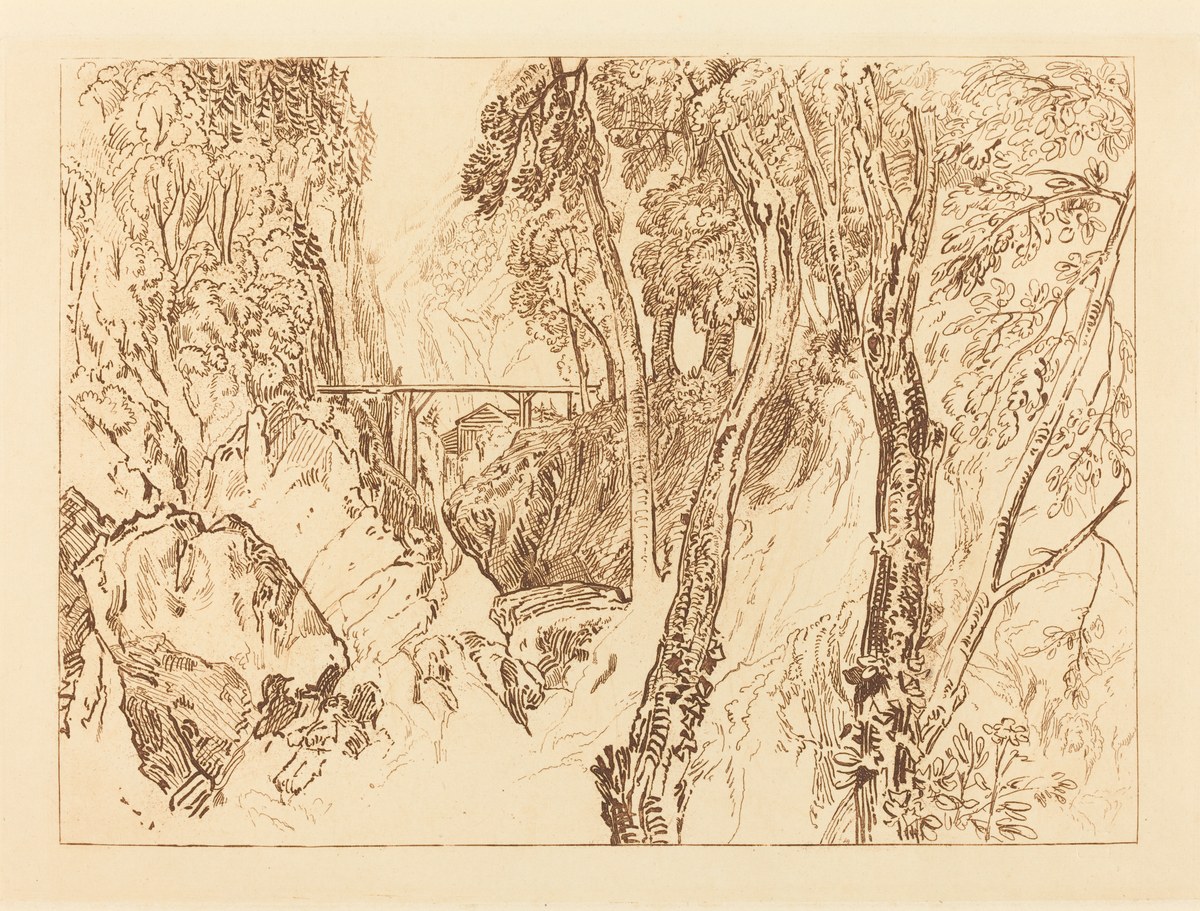 | | J.M.W. Turner (design), etched and engraved by Henry Dawe, Mill near the Grand Chartreuse, Liber Studiorum plate 54, published 1 January 1816. Etching and mezzotint. National Gallery of Art, Washington, public domain (CC0). The original watercolour (c.1812–15) is at Tate. | | Over the following decades light became Turner's real subject. In The Fighting Temeraire (1839), an old warship from Trafalgar is towed up the Thames to be broken up, but what we remember is the blazing sunset and its reflection running across the river. A critic in The Spectator that year admired "the wondrous power of his art in representing an atmosphere of light". Turner called the picture his "Darling" and never sold it. | 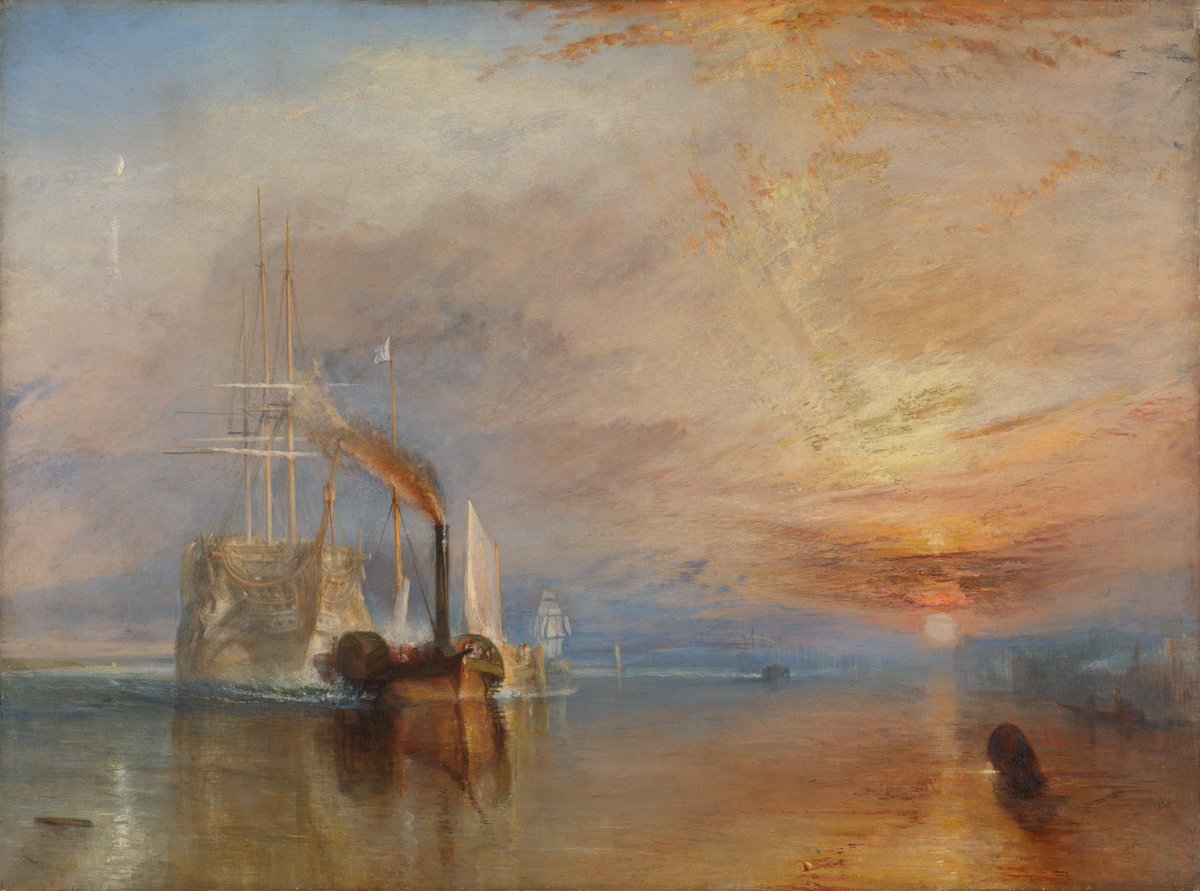 | | J.M.W. Turner, The Fighting Temeraire, 1839. Oil on canvas. The National Gallery, London. Via Wikimedia Commons, public domain. | | Near the end of his life he went further still. In Norham Castle, Sunrise, painted around 1845, the castle above the River Tweed is barely a blue shadow; sky, mist and water melt into one glow of yellow light. | 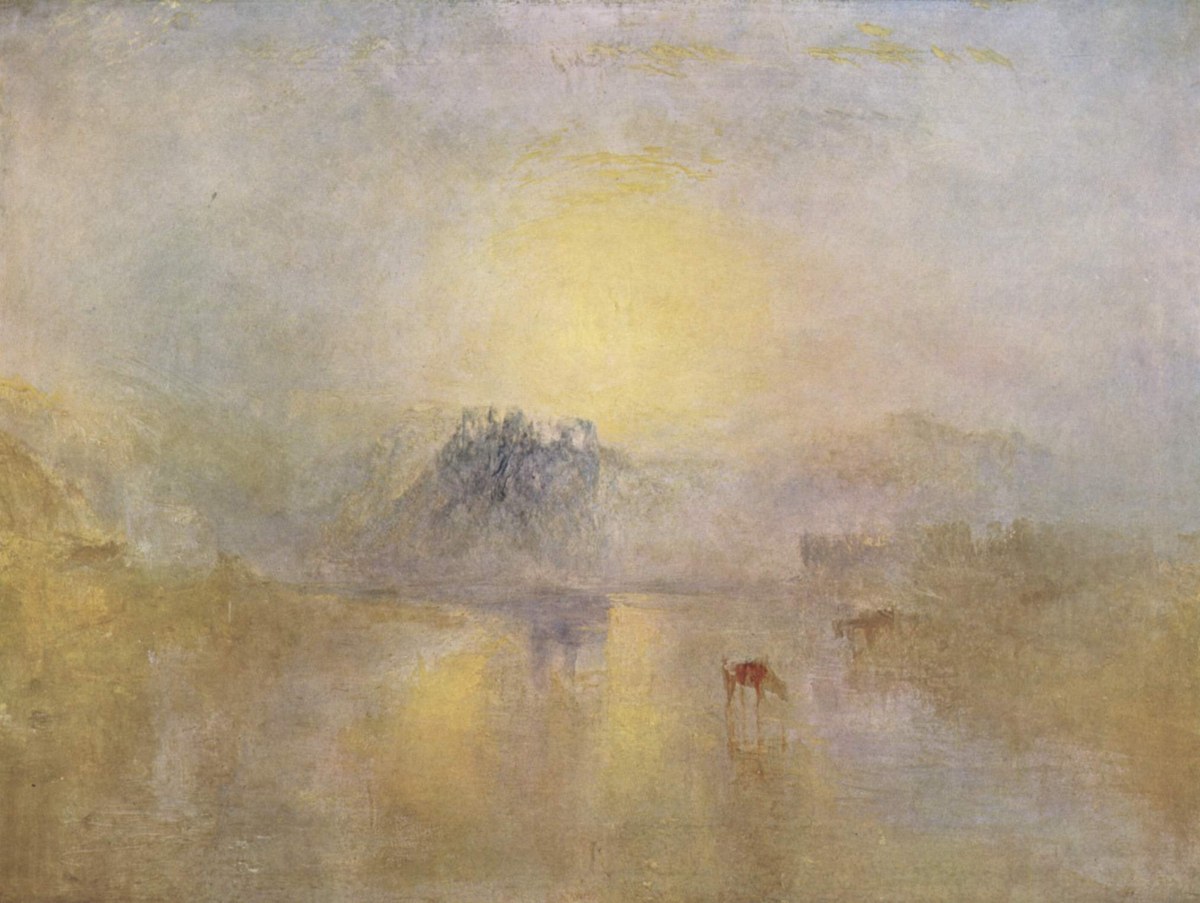 | | J.M.W. Turner, Norham Castle, Sunrise, c.1845. Oil on canvas. Tate (Turner Bequest). Via Wikimedia Commons, public domain. |
| | 2) New paintings | 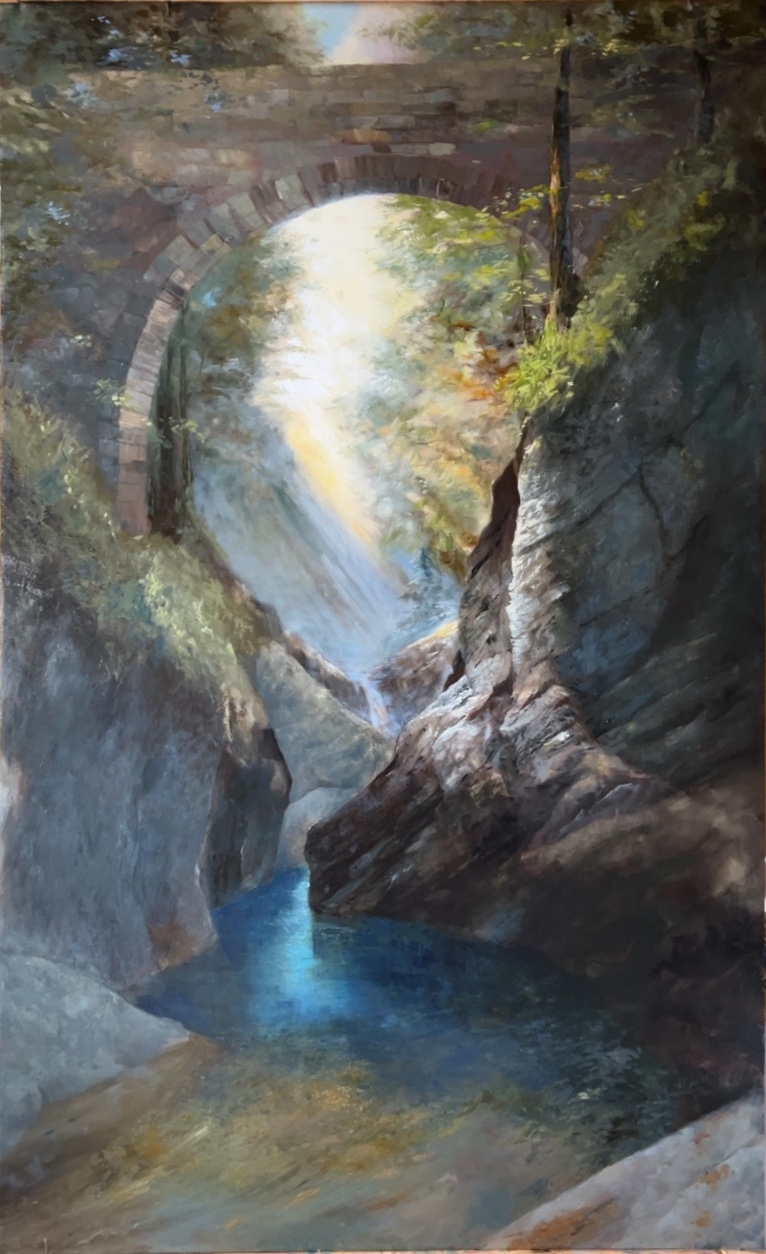 | | Joseph E. Sherriff, Under the Bridge Again. Oil on wood, 100 × 162 cm. | | Under the Bridge Again · oil on wood · 100 × 162 cm | | I painted this in my studio from a single pencil drawing made on site, so it relies a great deal on imagination, especially for the atmosphere and the light. The bridge is the Pont Pérant, built around 1500. I am sure Mr Turner must have used this bridge, and stopped to admire the same scenes that I do. | | For any enquiries about this painting, write to me: joseph.e.sherriff@gmail.com | | 3) Workshops | 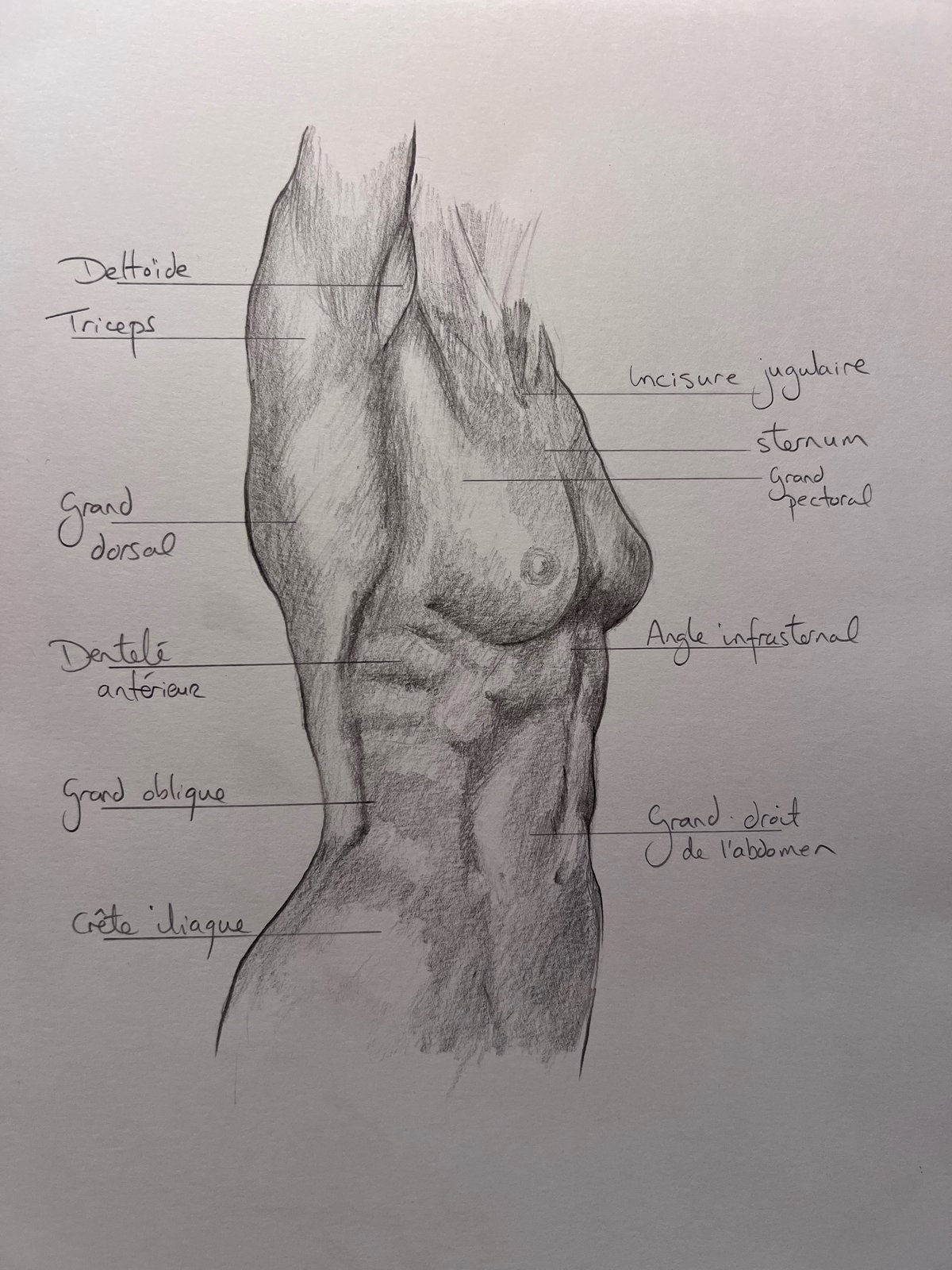 | | Anatomical study of the torso, pencil, Joseph E. Sherriff. | | The next workshop is “Les fondamentaux de l’anatomie en dessin” (Anatomy fundamentals in drawing). | Sundays 15 and 22 November 2026 · 10:00–17:00
Maison Prataz, 50 rue Jean-Jacques Rousseau, 73360 Les Échelles
€135 for the two days (including a live model on the afternoon of day 2) + Maison Prataz membership €15 individual / €20 family. Materials provided. All levels, teens and adults. 6 participants maximum. (Taught in French.) | | Day 1: simplified geometric construction (gesture, lines of action, basic volumes, from references). Day 2: progressive addition of muscle masses and anatomical detail, with a live model in the afternoon. It can be taken independently of January’s “L’anatomie en mouvement” (also €135). | | Coming up: | - “L’anatomie en mouvement” (Anatomy in motion: joints, pelvis and shoulders): 23–24 January 2027
- “Le portrait en dessin” (Portrait drawing): 21 and 28 February 2027
- “Le portrait en peinture” (Portrait painting in oil, acrylic or pastel): 20–21 March 2027
- “Rendre les textures en peinture” (Rendering textures in painting): 10–11 April 2027
- “La composition” (Composition): 16–17 May 2027
- “Peinture abstraite : créer la cohérence” (Abstract painting: creating coherence): 5–6 June 2027
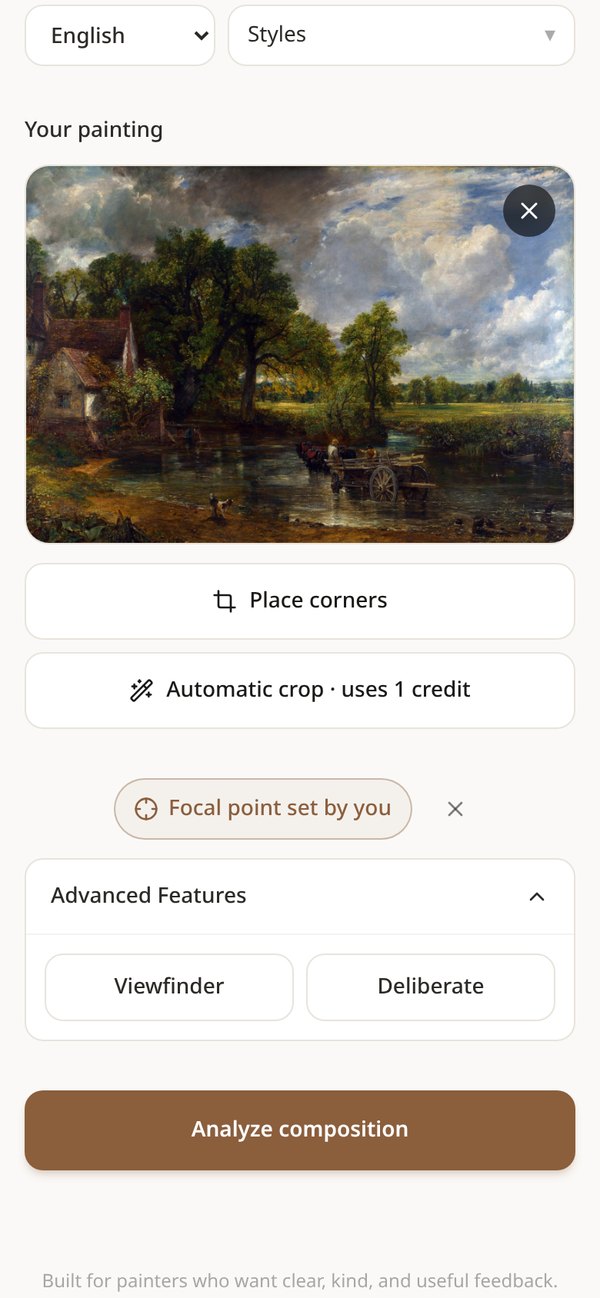
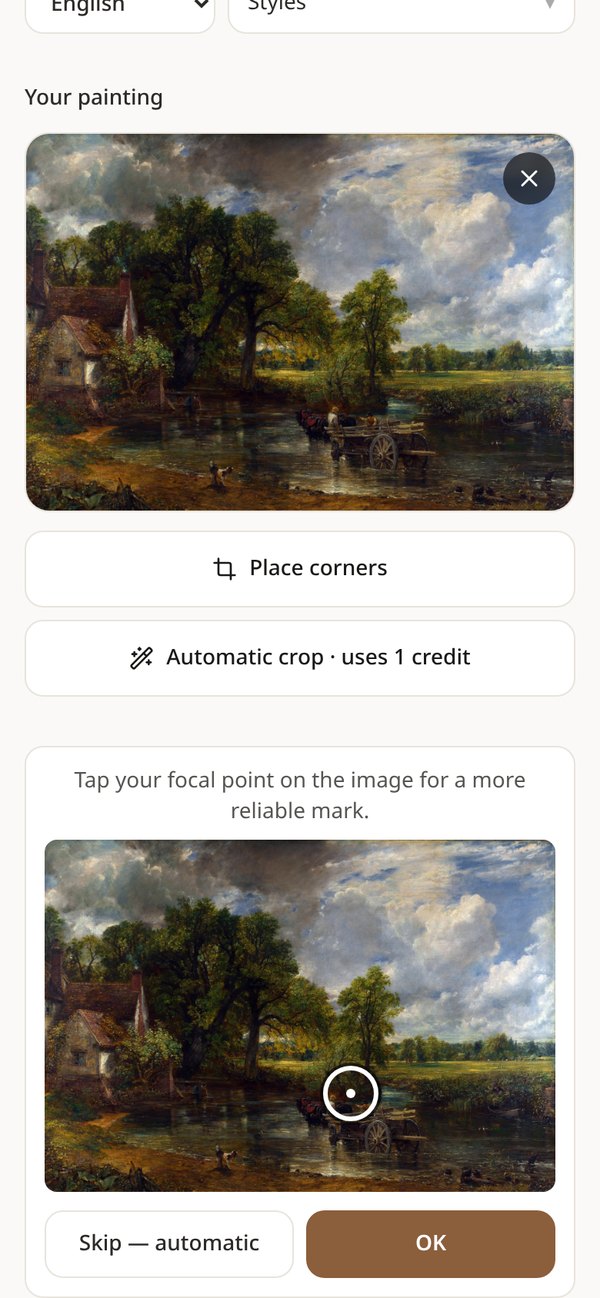
| | All these workshops take place at Maison Prataz in Les Échelles and are listed on artstage.fr. | | For information and bookings, contact me directly: joseph.e.sherriff@gmail.com · +33 6 45 76 97 36 | | 4) ClearIdeas — New in Composition Studio: a closer look at your design | | For several months I have been working on a suite of apps designed to give my students, and anyone who wants it, competent feedback that is always available. The aim is to help them become independent in using the principles behind drawings and paintings that “work”, through an iterative, personalised approach. | | Composition Studio now gives every painting a composition mark out of 10, with a breakdown showing where points were gained or lost: balance, value structure, focal placement, focal contrast, edges, variety of masses, and purposeful empty space. The mark was calibrated on more than a hundred acknowledged masterpieces, from Edgar Payne to Japanese and Chinese painters, so quiet areas and mist are rewarded rather than penalised. | | To demonstrate, I ran one of my own paintings, "Aiguilles", an alpine meadow beneath the peaks, through the app. It scored 6.2: a busy left edge pulled the eye out of the picture and the values lacked a clear structure. Trimming the cluttered left edge and a strip of foreground grass, with no repainting, raised the mark to 8.0. The peaks, lake and great rock now hold together in a simple, readable pattern of lights and darks. | 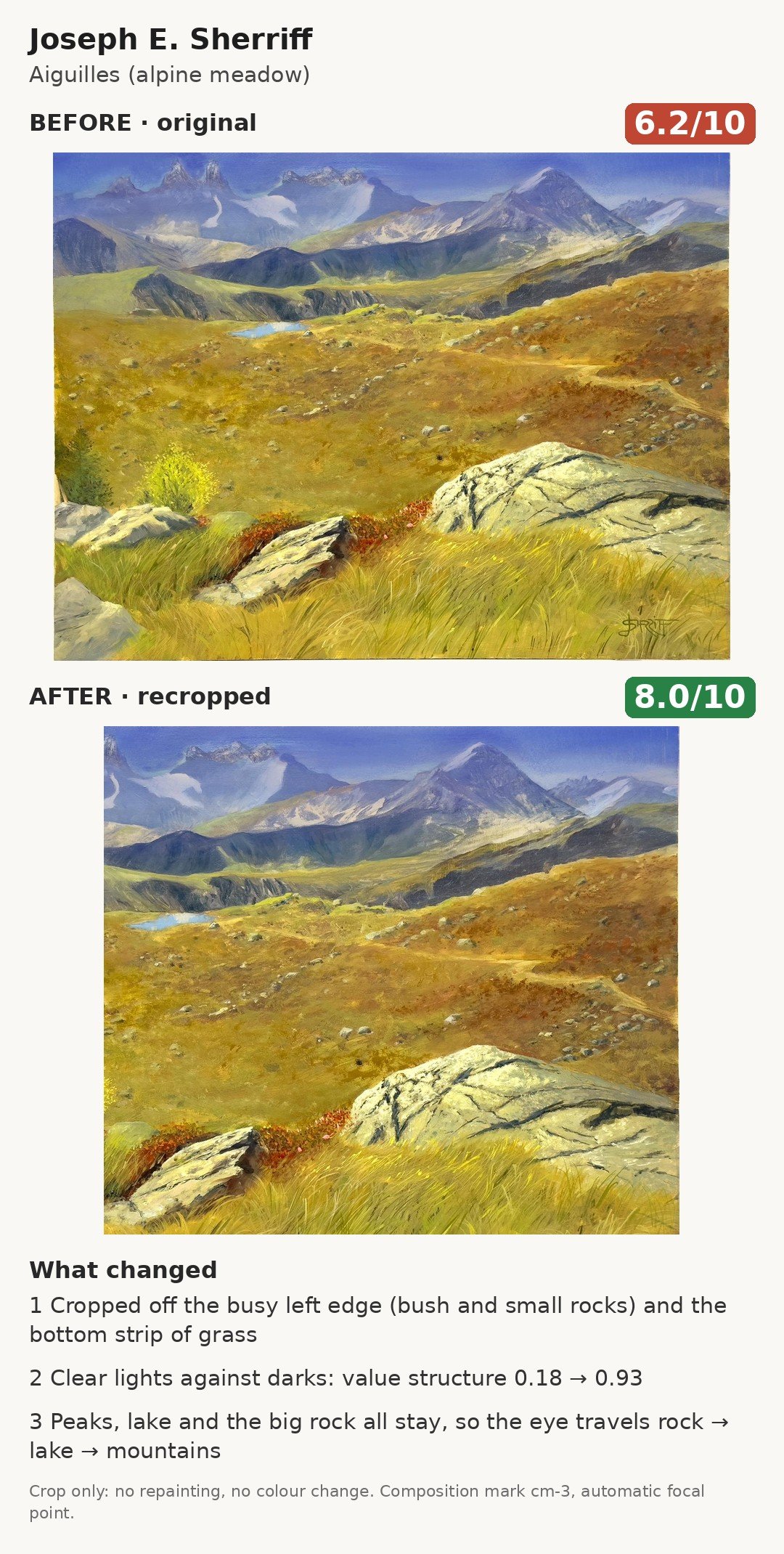 | | Before and after: Aiguilles, 6.2 to 8.0 with a crop only. | | | Composition Studio on a phone: Advanced Features and a focal point set. | | The new tools sit under Advanced Features, so the main screen stays simple on a phone: | - Viewfinder frames a scene on location before you start.
- Thumbnails offers alternative small layouts of your idea.
- Structure suggests underlying master structures, such as an S-curve or steelyard.
- Squint and Mirror reveal big shapes and lopsided balance, the classic studio tricks.
- Notan reduces the image to two values to test its design.
- Progress and Your trends follow your marks over time, highlighting recurring strengths and habits.
| | Your private profile, viewable and editable under My profile, lets the feedback become more personal the more you use it. The measured mark is free. | | Try it: clearideas.art/composition | 5) Technical thoughts — A Window on the World: Using a Viewfinder| Last week's article argued that a painting begins when its edges and its centre of attention are chosen. A simple tool makes that decision quicker and more reliable on location: the viewfinder. | | It need not be elaborate. A sheet of clear plexiglass, framed to a fixed proportion (often 2:3, to match the painting board), with a cross drawn through the centre to divide the view into four quadrants. A grid of thirds, or even quarters, can be added as well. | 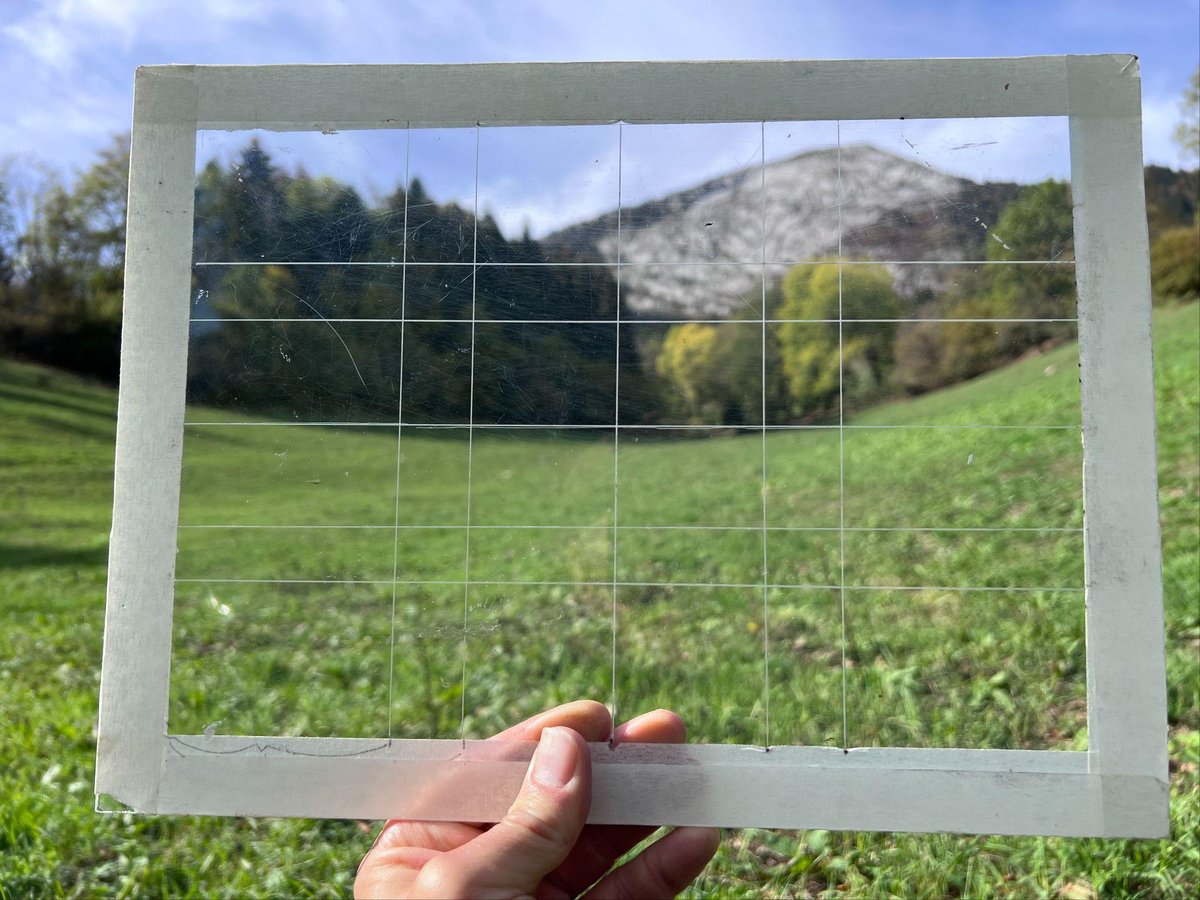 | | The viewfinder: framed plexiglass with its grid, held up to the scene. | | Held up in front of the scene, the viewfinder can be moved closer or further away, left or right, and the composition changes in real time. A rock slides into a corner, a pool of light lands near a third, a distracting branch disappears out of frame. Because the proportion matches the board, what appears through the plexiglass is what will be painted. There are no surprises later from a painting that turns out too tall or too cramped. | | Once a framing is chosen, everything must stay still. Neither the eye nor the viewfinder should move while the marks are made. A shift of the head by a few centimetres, or a frame that drifts, and every reference slides out of place. Bracing the viewfinder against something steady, keeping the elbow tucked in, and closing one eye to look from a single fixed point all matter. | | The major references are then marked directly on the plexiglass with a fine marker: the line of the far bank, the edge of the main rock, the curve of the current, and the spot that will become the centre of attention. | 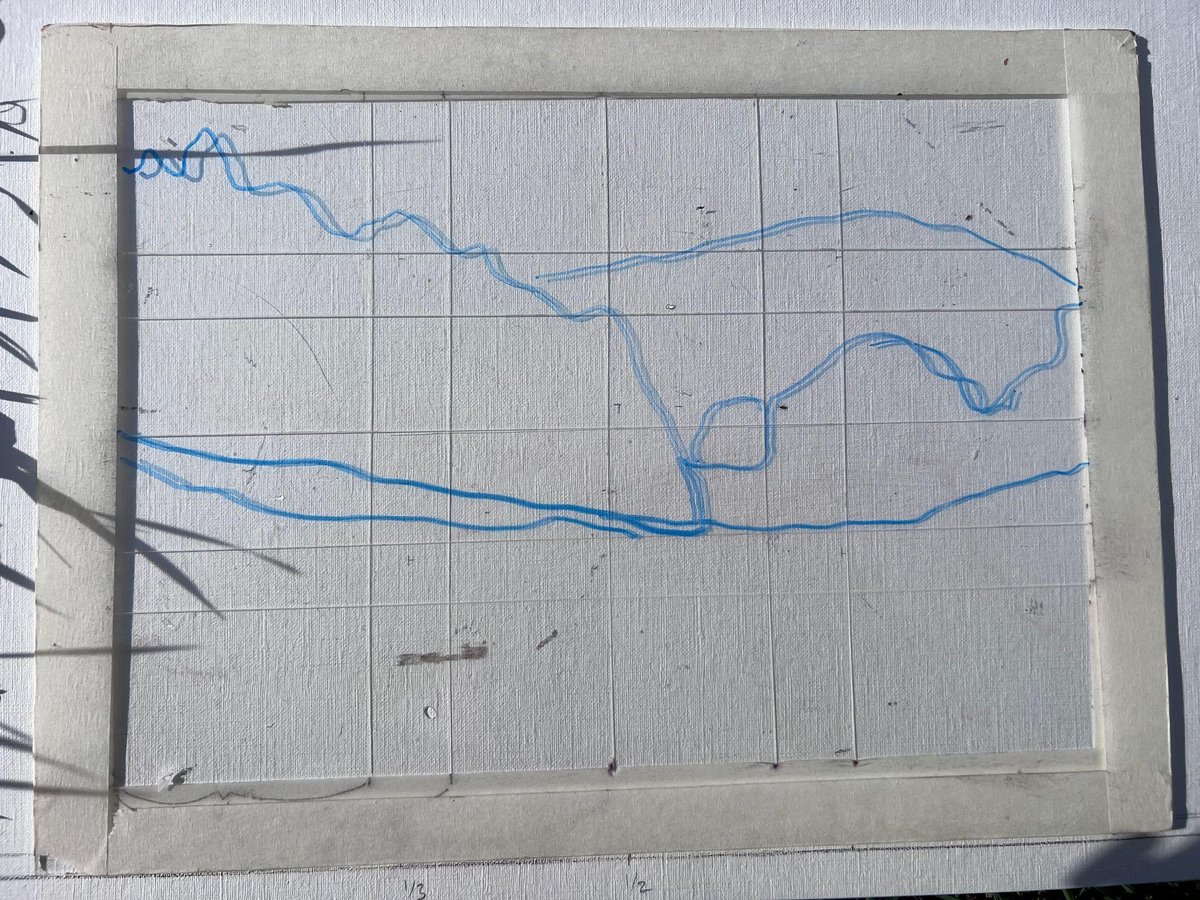 | | Reference marks drawn on the plexiglass. | | These marks are simple placemarkers, nothing more: a dot, a short line, a rough contour. The temptation to draw every stone and ripple is strong and should be resisted. Detail at this stage only gets in the way. A composition works through positioning and a few simple, strong shapes. If the big masses are in the right place, the painting will stand. If they are not, no amount of detail will save it. | | The painting surface (paper, canvas or board) carries the same reference points as small dots where the centre lines and thirds cross. Because both surfaces share the same grid, transferring the marks is straightforward: a rock just left of the centre cross, a bank meeting the edge a little below the upper third. Each is placed in pencil or thin, diluted paint, again as simple shapes, and checked against the viewfinder. | 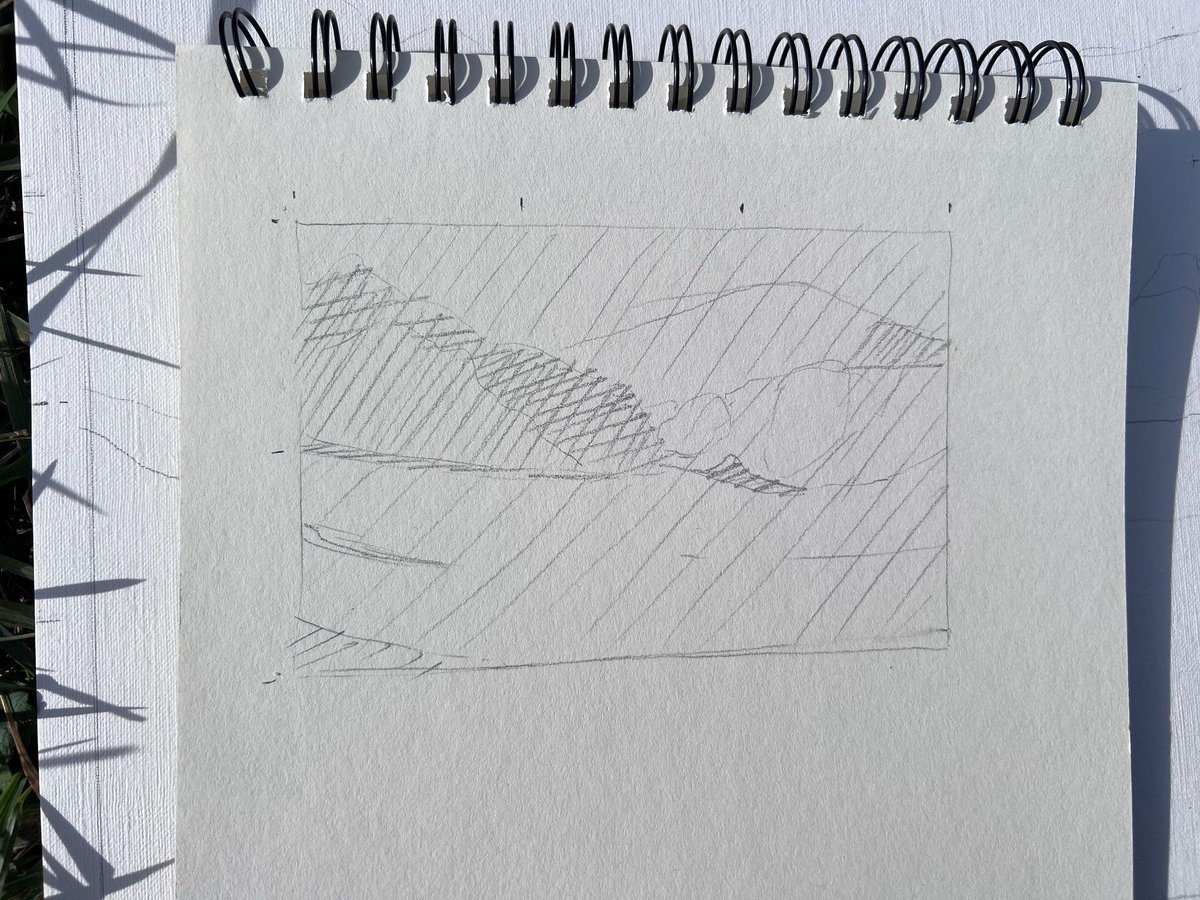 | | A simple value study | 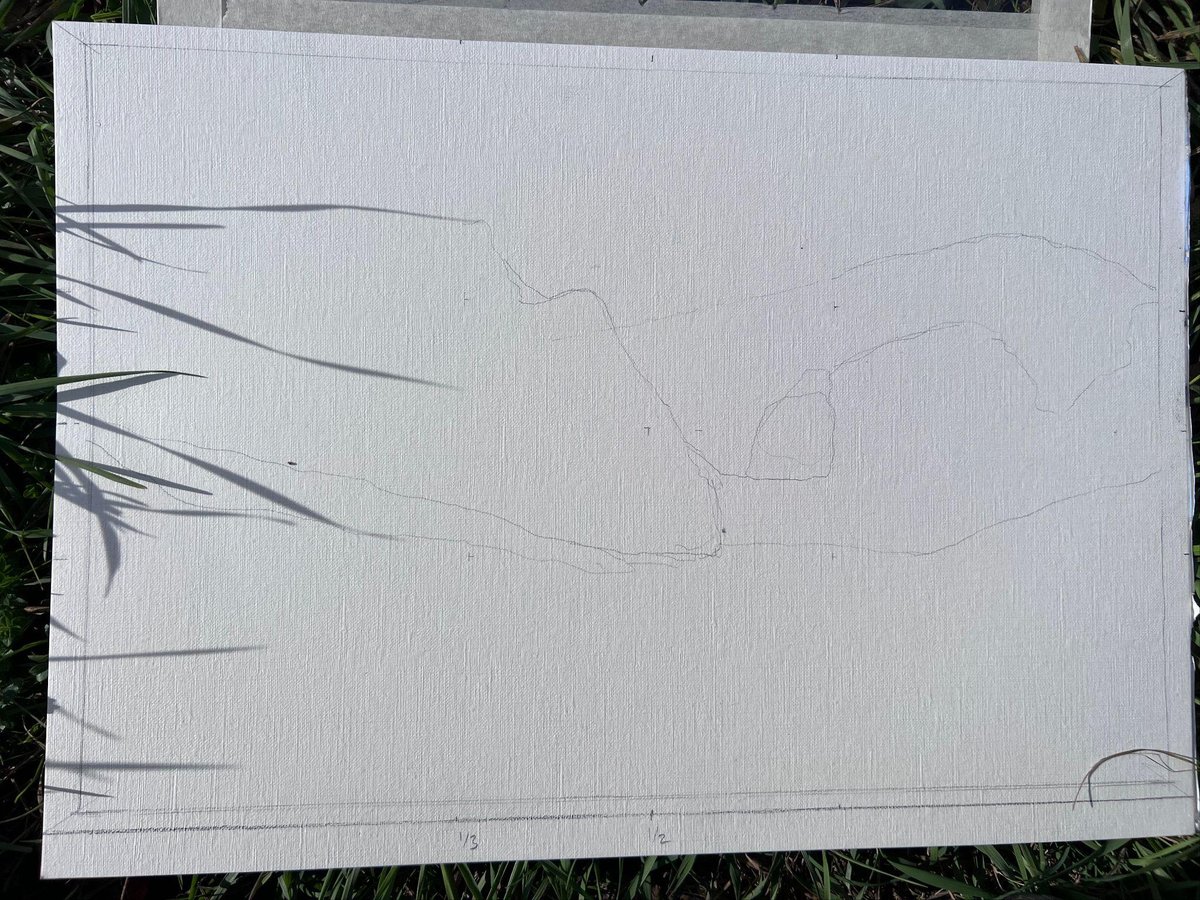 | | Transferring to the board. | | Within fifteen minutes at most, a usable composition is drawn on the board. It is simple and light, with nothing precious about it yet, but the big decisions are made and anchored. Outdoors, where the light keeps moving, the energy for careful thinking is best spent at the start. | | The viewfinder does not make the choices. It helps reduce and organise the information just enough for them to be grasped deliberately, and helps lay in the big shapes. | | With the composition in place, the next step is deciding where the lights and darks will go: the value study, the subject of next week's article. |
| | | 7) Shop | | Original plein-air oils from the Chartreuse are available in the shop: joseph-sherriff.com/en. |
| Thanks for reading. |
Joseph E. Sherriff
Atelier Joseph Sherriff · Saint-Pierre-de-Chartreuse
joseph-sherriff.com
joseph.e.sherriff@gmail.com · +33 6 45 76 97 36 |
|
|