| Today I want to feature an artist who many of us find inspiring through his use of light and mist painting almost abstractly in the early 19th century. I admire his courage to paint in a way that nobody had ever tried before him, breaking convention and always true to artistic necessity. |
| In the summer of 1802, the Peace of Amiens briefly reopened the Continent to British travellers, and the 27-year-old Joseph Mallord William Turner set off for the Alps. It was his first journey abroad, and the Tate calls it arguably the formative experience of his life. Approaching Grenoble along the Isère, he made a detour into the Chartreuse, which he found "abounding with romantic matter". His sketchbook from that tour, now at the Tate, holds drawings of the Gorges du Guiers Mort: Fourvoirie, Pont Pérant, the Pic de l'Oeillette, a bridge over a mountain stream. |
| That is my river. I paint the Guiers Mort, en plein air, most weeks of the year, and it moves me that Turner stood in the same gorge more than two centuries ago. Look closely at his drawing: on grey-buff paper, in pencil and chalk, the only touches of white gouache are on the water. The torrent is the light source of the whole sheet. When I set up my easel by the river, that is what I am hunting for too: the moment the water catches the light and becomes the brightest thing in the valley. |
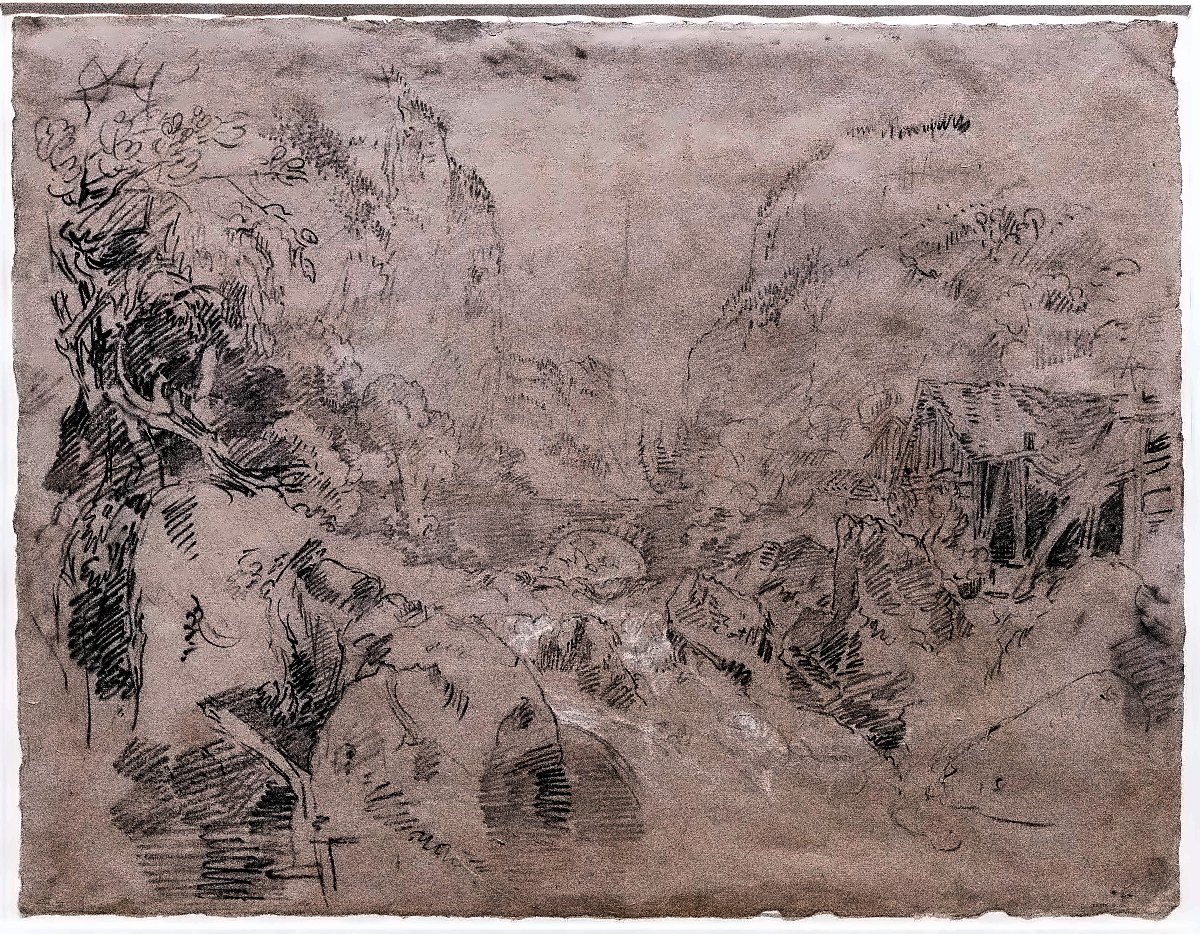 |
| J.M.W. Turner, A Bridge over a Mountain Stream: Gorges du Guiers Mort, Chartreuse, 1802. Pencil, chalk and white gouache. Tate (Turner Bequest). Photo via Wikimedia Commons, public domain; contrast lightly adjusted. |
| Turner did not forget the gorge. Around 1812–15, drawing on his Chartreuse studies, he made a watercolour of a mill in the valley, engraved for his Liber Studiorum and published on 1 January 1816. John Ruskin noticed the choice: “Another than Turner would have painted the convent… He painted the mill in the valley.” I understand him: it is the torrent and the light in the glen, not the monastery, that keep drawing me back to the Guiers Mort. |
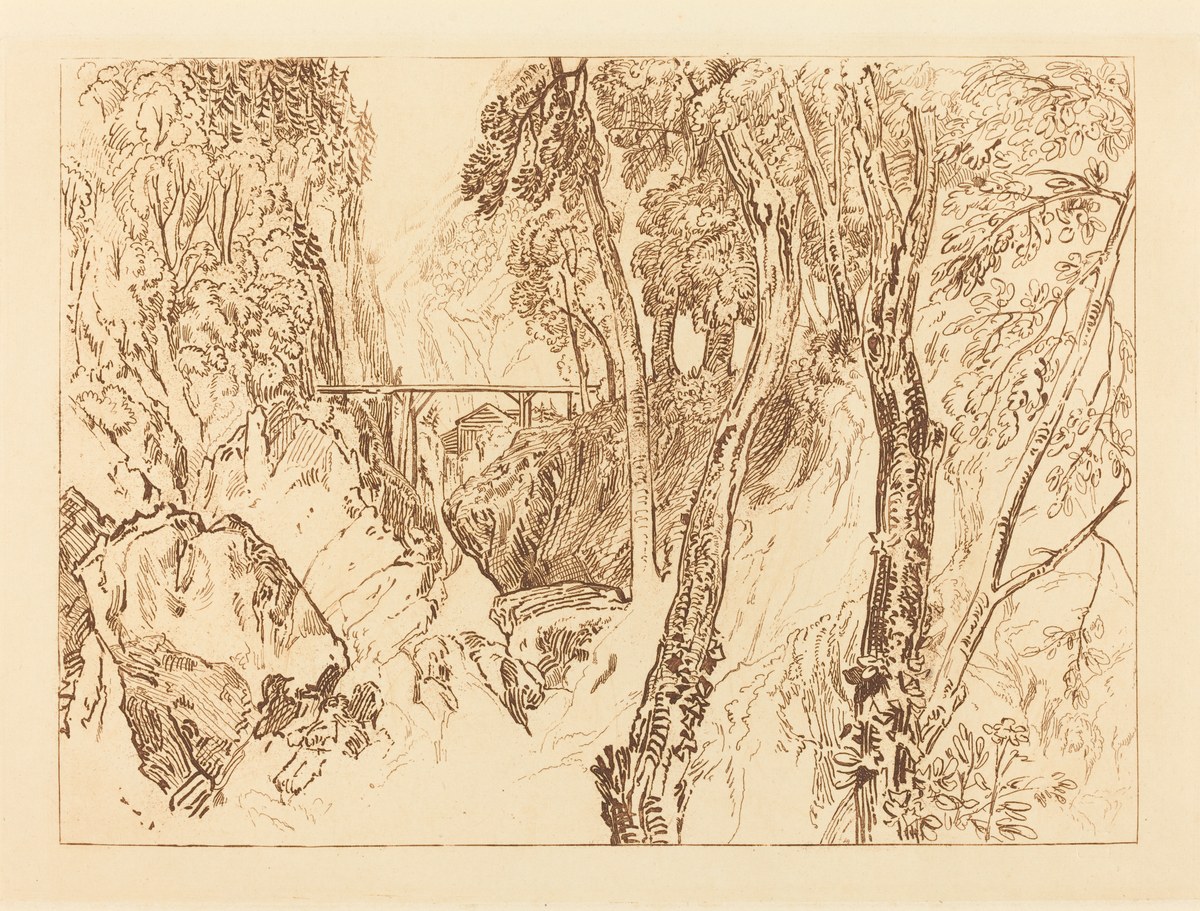 |
| J.M.W. Turner (design), etched and engraved by Henry Dawe, Mill near the Grand Chartreuse, Liber Studiorum plate 54, published 1 January 1816. Etching and mezzotint. National Gallery of Art, Washington, public domain (CC0). The original watercolour (c.1812–15) is at Tate. |
| Over the following decades light became Turner's real subject. In The Fighting Temeraire (1839), an old warship from Trafalgar is towed up the Thames to be broken up, but what we remember is the blazing sunset and its reflection running across the river. A critic in The Spectator that year admired "the wondrous power of his art in representing an atmosphere of light". Turner called the picture his "Darling" and never sold it. |
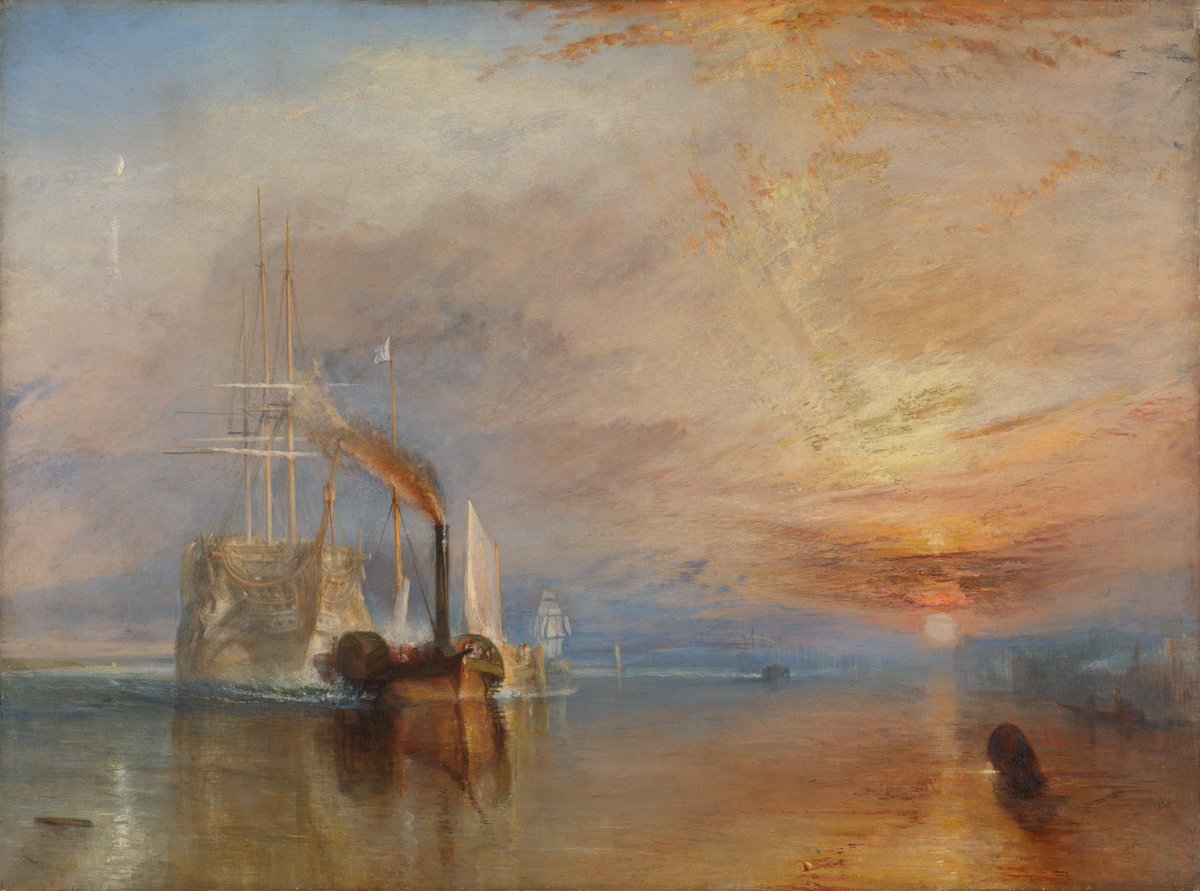 |
| J.M.W. Turner, The Fighting Temeraire, 1839. Oil on canvas. The National Gallery, London. Via Wikimedia Commons, public domain. |
| Near the end of his life he went further still. In Norham Castle, Sunrise, painted around 1845, the castle above the River Tweed is barely a blue shadow; sky, mist and water melt into one glow of yellow light. |
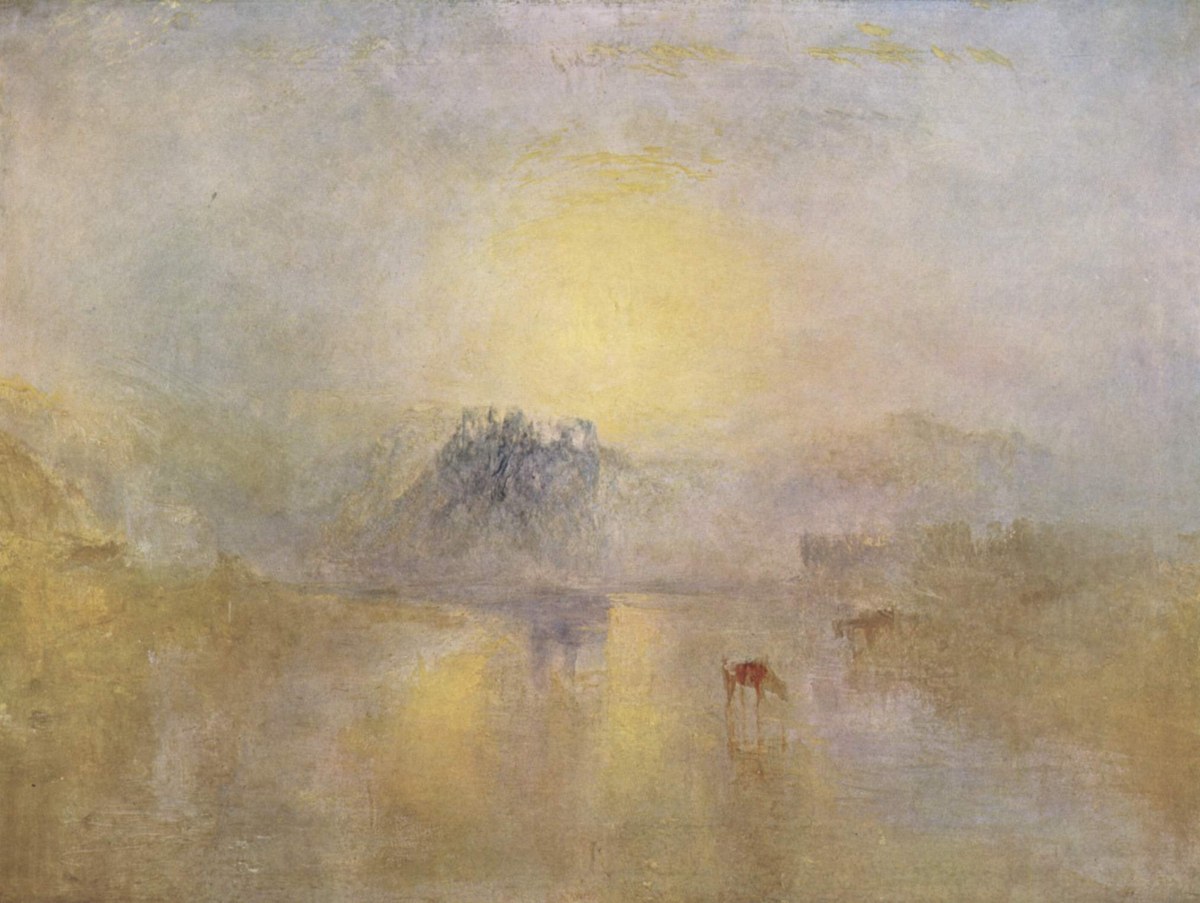 |
| J.M.W. Turner, Norham Castle, Sunrise, c.1845. Oil on canvas. Tate (Turner Bequest). Via Wikimedia Commons, public domain. |
From the letter of 23 October 2026
Lire en français